


Beyond Patriarchy: Womanism, Pan-African Feminism, and the Unfinished Work of Liberation
.png)
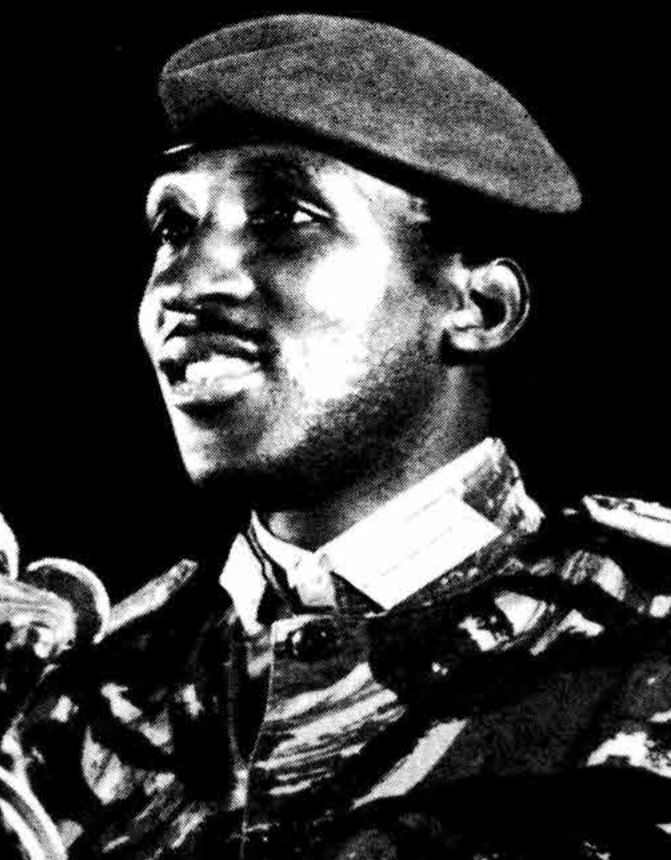
Sankara’s thoughts and intellectual traditions of women in the liberation movement find expression in womanist and Pan-African Feminist thought in envisioning women’s liberation beyond discussions about patriarchy. Kanda combines these traditions to contend that Sankarist and Feminist praxis must name and confront harmful cultural practices in the struggle for women’s liberation.
Introduction: Whose Revolution Is Complete?
Every call to ‘move beyond patriarchy’ on this continent eventually returns to a stubborn, uncomfortable question: can any liberation struggle call itself complete while half the population remains subordinated within it? Thomas Sankara, the Burkinabè revolutionary who led one of the most radical practices in African self-determination of the twentieth century, answered that question without equivocation. Addressing thousands of women in Ouagadougou on 8 March 1987, he insisted that the fate of the revolution and the fate of women were inseparable and that a revolution that liberated men while leaving women in the shadows of anonymity was not a revolution at all but an illusion.[1] Nearly four decades later, and more than sixty years after the formal end of colonial rule across most of the continent, African women are still waiting for the promise Sankara described, a promise that, in his own words, remains still merely a rumor for too many.[2]
To think beyond patriarchy, gender, and masculinity, I place two traditions in conversation: womanism, as it has been theorized by Black and African women thinkers, and Pan-African feminism, as most rigorously advanced today in the work of the Ugandan legal scholar and activist Sylvia Tamale. It also insists, following Sankara, that any feminist praxis on this continent must be prepared to name and confront harmful cultural practices directly, including female genital mutilation (FGM), which remains entrenched in specific communities such as the Elgeyo-Marakwet of Kenya's Rift Valley. Naming this is not a concession to Western moralism; it is, as I argue below, the very substance of a Pan-African feminist politics that refuses to trade women's bodily autonomy for a romanticised version of ‘culture.’
Womanism and Pan-African Feminism: Kin, Not Rivals
Alice Walker's now-canonical 1983 definition described a ‘womanist’ as a Black feminist attentive to the wholeness of her people, committed to the survival and wholeness of an entire people, male and female.[3] Womanism emerged in part as a corrective to a mainstream (white, Euro-American) feminism perceived as inattentive to race and to the particular position of Black women who could not, and did not wish to, separate their gender oppression from their racial and communal oppression.
African feminist scholars developed parallel but distinct frameworks suited to the continent's own histories. The Nigerian scholar Molara Ogundipe-Leslie proposed ‘STIWANism’ (Social Transformation Including Women of Africa) as an explicitly African alternative to feminism understood as an imported, adversarial ideology; her framework insisted that African women's liberation had to be woven into the broader project of social transformation rather than treated as a separate, imported agenda.[4] Nigerian sociologist Oyeronke Oyewumi went further still, arguing that the very categories of ‘woman’ and ‘gender’ as fixed, biologically anchored binaries are themselves colonial impositions on precolonial Yoruba social organisation.[5]
It is in this genealogy that Sylvia Tamale situates her own intervention. In Decolonization and Afro-Feminism, Tamale argues that Africa's formal decolonisation remains incomplete precisely because it has not been accompanied by a parallel decolonisation of gender, sexuality, and knowledge production; colonial hierarchies of race, sex, and class were, she argues, mutually constitutive and cannot be dismantled separately.[6] Tamale is explicit that Pan-Africanism and feminism are not rival projects competing for African women's loyalty but two halves of a single unfinished task. She devotes a chapter of that book explicitly to ‘Towards Feminist Pan-Africanism and Pan-African Feminism,’ documenting how African and Afro-diasporic women's contributions to the Pan-African project, from the women who financed and organised the 1945 Manchester Pan-African Congress to the founders of the African Feminist Forum in Accra in 2006, have been systematically erased from the dominant historical narrative.[7] In place of a human-rights paradigm she considers still shaped by liberal individualism, Tamale, much like Micere Mugo, proposes the African relational philosophy of Ubuntu, ‘I am because we are’, as a more authentically African ground for reconstructing gender justice.[8]
Earlier, in her edited volume “African Sexualities: A Reader,” Tamale had already made the case that a serious Pan-African feminism must be willing to speak openly about sexuality, desire, and bodily autonomy; subjects that African societies, under the combined pressure of colonial Victorian morality and postcolonial nationalist ‘respectability,’ have too often treated as taboo, and which patriarchal power has exploited precisely because they are unspoken.[9]
What womanism and Pan-African feminism share, then, is a refusal of the false choice between ‘African culture’ and women's liberation, and a refusal of any solidarity, with the nation, the race, or the continent, that is purchased at women's expense. Both insist that men's liberation from colonial and neocolonial domination cannot be the finish line; both insist, as Sankara did, that the finish line only exists when women cross it too.
Yet ‘kin’ should not be mistaken for ‘identical,’ and the distinction matters for how each does its work. Walker’s womanism is rooted in the specific experience of Black women in the diaspora, and especially in the United States, confronting a mainstream feminism that had failed to reckon with race; its idiom draws on folk culture, spirituality, and an ethic of care for the wholeness of the community that deliberately includes men rather than organising against them.[10] It functions, in the first instance, as a corrective within feminism: an insistence that Black women’s experience be centred rather than assimilated into a white, middle-class norm. Tamale’s Pan-African feminism is a different kind of project: continental rather than diasporic, and genealogically tied to Pan-Africanism itself rather than to feminism’s internal debates. Its central quarrel is not with feminism’s racial blind spots but with the incompleteness of African decolonisation, which Tamale argues cannot be separated from the ongoing coloniality of gender, sexuality, and knowledge production.[11]
Where womanism’s method is substantially cultural and relational, Ubuntu’s ‘I am because we are’ extended outward to household and community, Pan-African feminism as Tamale develops it is more insistently materialist and structural, concerned with land, labour, law, and the state as the terrain on which women’s subordination is produced and must be undone. The two traditions are kin because both refuse the false choice between culture, race, or nation on one side and women’s liberation on the other; they are not identical because they emerged from different histories of struggle, address different audiences, and diagnose the problem at different levels, one cultural and relational, the other structural and institutional. This essay treats that difference as a resource rather than a contradiction: womanism supplies a vocabulary of communal wholeness and internally led transformation that keeps Pan-African feminism from collapsing into a purely legalistic or donor-driven project, while Pan-African feminism supplies the structural analysis of land, capital, and the state that keeps womanism from resting content with cultural repair alone.
What Sankara Understood That Many Revolutions Did Not
It is worth dwelling on Sankara's contribution, because so much Pan-African political thought of his generation treated the ‘woman question’ as secondary to the anti-imperialist struggle; something to be addressed ‘after’ national liberation was secured. Sankara rejected this sequencing outright. In the Political Orientation Speech delivered on behalf of the National Council of the Revolution in October 1983, barely two months after the popular uprising that brought him to power, he stated plainly that Burkina Faso's revolution was fought in the interests of women precisely because the basis of their domination lay in the very structure of political and economic life that the revolution sought to overturn. Meaning there could be no revolutionary victory that left that structure, and women's subordination within it, intact.[12]
Sankara's analysis, drawing explicitly on Friedrich Engels's account of the origins of women's oppression in the emergence of private property, refused both biological determinism and cultural relativism.[13] He argued that women's inequality was not a natural or eternal fact but a social and historical one, produced by particular relations of production; and therefore could be undone by transforming those relations.[14] Crucially, he also refused to let revolutionary men off the hook: he named, specifically and without euphemism, the everyday ‘machismo’ of supposedly progressive men: the double standards around adultery, the jealousy that policed women's political participation, the casual denigration of women as ‘materialist’ or ‘manipulative’ while identical behaviour in men went unremarked.[15] This is precisely the terrain that contemporary calls to interrogate ‘masculinity’ are trying to reoccupy: not an abstract critique of patriarchy ‘out there,’ but an insistence that liberation movements confront the patriarchy reproduced inside their own ranks, their own homes, and their own leadership structures.
Sankara's practical programme, the establishment of the Women's Union of Burkina, the drive to enrol girls in literacy campaigns at parity with boys, a new labour code guaranteeing equal pay, legislation against forced marriage, was explicitly framed as a floor, not a ceiling; he insisted that formal decrees alone, without organised, self-mobilised women pressing their own demands, would change nothing.[16] That insight anticipates precisely what Tamale and other contemporary African feminists argue today: that top-down ‘gender machinery’ (ministries of women's affairs, gender desks, donor-funded gender-mainstreaming programmes) can produce the appearance of progress while leaving underlying power relations untouched, unless it is accountable to organised, autonomous women's movements.[17]
Naming Harmful Practices Without Ceding Ground to Relativism or to Racism
A genuinely Pan-African feminism has to walk a difficult line. On one side lies the colonial and neocolonial habit still visible in much Western media coverage, from treating African women as passive victims of a monolithic, to unchanging ‘African culture,’ frame that erases African women's own long history of organising against harmful practices and that conveniently ignores parallel forms of gender violence in the Global North. On the other side lies a defensive cultural relativism that treats any internal critique of a community's practices as a betrayal, an act of complicity with Western moralising, or an attack on ‘our culture’ as such.
Tamale's own position charts a course between these two traps. She has argued consistently that culture is neither static nor sacred, that all cultures contain both liberatory and oppressive elements, and that African women themselves, not outside actors, must be the primary agents of naming which practices serve the community and which serve only patriarchal control over women's bodies and reproduction.[18] Sankara made the identical argument in far blunter terms in 1987, denouncing the mutilation of women's bodies, including female circumcision, as a form of violence dressed up as tradition, one that could endanger a woman's ability to have children and affect her emotional life, and insisting that such practices persisted only because society had conditioned women to believe they were necessary to be acceptable to men.[19]
It is worth making ‘patriarchal control over women’s bodies and reproduction’ concrete, since left as an abstraction the phrase can obscure more than it reveals. It manifests, for a start, in the gatekeeping role that older women themselves frequently occupy: grandmothers, aunts, and, in the Elgeyo-Marakwet case discussed below, the cutters who perform FGM are typically women, enforcing a cultural order that grants them status and belonging precisely for policing younger women’s bodies on the community’s behalf. It manifests in child and forced marriage, which converts a girl’s reproductive capacity into a transaction between families before she is old enough to consent to it. It manifests in sex trafficking and sexual slavery, in social and legal norms that dictate when and with whom a woman may have sex, and in rape cultures that redirect blame onto survivors for ‘inappropriate’ dress rather than onto perpetrators. And it manifests, no less significantly, in decisions about childbirth, spacing, number, and timing of children, made for women rather than by them, whether by husbands, in-laws, clergy, or the state. FGM, examined in detail below, is one instance of this wider pattern rather than an exception to it: control over reproduction and sexuality exercised, paradoxically, through women’s own hands.
Female genital mutilation (FGM) remains one of the clearest test cases for this Pan-African feminist method. This is not a claim that FGM is the most widespread or most damaging expression of that control across the continent; domestic violence and other forms of gender-based abuse are, by most measures, considerably more pervasive, and they too are routinely shielded behind appeals to culture, privacy, or the sanctity of the home. FGM is chosen here for what it illustrates methodologically, not for its scale.
FGM is a discrete, ritualised, and generationally transmitted practice, performed, defended, and, increasingly, renounced by women themselves rather than by individual men acting alone, which makes it an unusually clear window onto the dynamic just described: patriarchal control operating through women’s own hands, and therefore a practice that can only be undone through women’s own agency rather than by external decree. It is also, as the Elgeyo-Marakwet case below shows in granular detail, one of the few forms of gendered violence on the continent with a sustained, well-documented record of community-led transformation, which is what makes it useful as a case study for this essay’s wider argument: that the most durable resistance to patriarchal control over women’s bodies is the resistance women organise from within. The methodological point extends, in principle, to domestic violence, forced marriage, and the other manifestations catalogued above; FGM simply offers the most thoroughly documented example through which to demonstrate the method.
It is neither exoticised as uniquely ‘African barbarism' nor excused as an untouchable cultural inheritance but analysed as what it is: a mechanism, embedded in specific patriarchal social structures, for controlling women's sexuality, marriageability, and social standing, and one that African women's movements have been fighting for decades, largely without Western prompting.
The Case of the Elgeyo-Marakwet
Kenya offers a particularly instructive, and particularly stubborn, example. FGM was historically practised across the great majority of Kenya's forty-three ethnic communities, though prevalence today varies enormously by region.[20] Among the Kalenjin-speaking Keiyo and Marakwet communities of Elgeyo-Marakwet County, in the Rift Valley, the practice is known as Tumdop Tibiik, literally, ‘the initiation of girls’, a ceremonial process that can extend from several days to a full month, and that functions as the community's central rite of passage from girlhood to socially recognised womanhood.[21] Researchers working directly with Marakwet women have documented that the ritual is understood locally not primarily as an act of cruelty but as the vehicle through which cultural values, expected behaviour, and adult status are transmitted to girls, which is precisely what makes it so resistant to simple legal prohibition.[22]
Recent field reporting from Elgeyo-Marakwet illustrates both the practice's persistence and the shape of resistance to it. Community elders have defended the ritual in explicitly religious and cosmological terms, describing it as a means of averting a curse that would otherwise fall on the family and even on future initiation ceremonies for a woman's sons and daughters. Meaning, an uncircumcised woman risks exclusion from the community's collective life altogether.[23] Men, too, are implicated as enforcers of the norm. A resident of Chesongoch village in Elgeyo-Marakwet described how a man seeking to ‘retain the respect of the village’ as a leader is expected to marry a woman who has undergone the cut, illustrating precisely how FGM functions to police not only women's bodies but men's status through women's bodies.[24] The county's FGM prevalence, around 19.7 percent as of recent surveys, still among the higher rates nationally, reflects both the depth of this entrenchment and the real, if partial, progress made by two decades of organising.[25]
That progress has come substantially from Kenyan women themselves. Lina Kilimo, a Marakwet woman who stood for the Kenyan Parliament in 2002 on a platform that explicitly included ending FGM/C, was told by opponents that as an uncircumcised woman she was unfit for public office. She won anyway, later co-sponsoring legislation to strengthen Kenya's legal sanctions against the practice, and has spoken of a shift in attitudes among younger Marakwet girls who now see that a woman can be uncut and still hold the highest offices in the land.[26] Contemporary programmes in the region, supported by the UN Population Fund and implemented through local partners, have gone further still, working directly with former cutters, offering them alternative livelihoods (in one documented case, providing goats to replace the income lost from cutting) so that they themselves become community advocates against the practice, and developing ‘alternative rites of passage’ that preserve the communal, celebratory, knowledge-transmitting elements of initiation while removing the cutting itself.[27]
That framing deserves the same scrutiny this essay has applied to ‘gender machinery’ more broadly. Kilimo’s political career was self-initiated and self-financed within Kenyan electoral politics; it required no foreign convener. The alternative-rites-of-passage programmes are a different kind of intervention: designed, funded, and evaluated substantially by an international agency, with ‘local partners’ operating as implementers within a framework, timeline, and set of success metrics that originate outside the community. That distinction matters for a Sankarist reading of autonomous organising. It is not that such programmes are illegitimate, former cutters redirecting their livelihoods and status toward ending the practice is a genuine achievement, but that ‘local partners’ can describe an authentically community-driven initiative or a donor-designed programme delivered through local intermediaries, and the two are not the same thing even when they produce similar outcomes on the ground.
A donor-funded programme that treats former cutters as beneficiaries to be equipped, rather than as the constituency that sets the agenda, risks reproducing precisely the dynamic Sankara warned against: visible progress that leaves the question of who decides, what counts as success, and on what timeline, in the hands of an external institution rather than the community itself. The Marakwet case is instructive not because international support is inherently compromising, but because it shows both possibilities within a single county, an autonomous political project in Kilimo’s case and a donor-supported development intervention in the alternative rites of passage, and a genuinely Pan-African feminist reading has to hold the two to different standards rather than crediting both equally to ‘the community.’
Kilimo’s political career, in particular, illustrates in miniature exactly the method that womanist and Pan-African feminist theory calls for: not an external condemnation that treats Marakwet culture as a fixed, alien object to be corrected from outside, but a transformation led from within the community: by cutters, mothers, elected women, and survivors, that distinguishes the community's genuine cultural inheritance (initiation, communal celebration, the marking of maturity) from the specific patriarchal violence that has attached itself to it. It also vindicates Sankara's insistence, thirty years earlier, that women's silence on such matters is itself a product of domination, and that the fight to end practices like FGM is inseparable from the fight for women's literacy, economic independence, and political representation, since it was precisely women's exclusion from decision-making, land, income, and education that made such practices possible to sustain against their own interests in the first place.[28]
What Feminism Must Mean for African Women Now
Bringing these strands together, a Pan-African, womanist feminism needs to insist on at least four things.
First, that patriarchy on this continent cannot be separated from the material structures: land tenure, labour, capital, debt, imperialism, that Sankara identified as its foundation. Legal equality without economic transformation is, as the Burkina Faso experience shows, necessary but radically insufficient.[29]
Second, that African men's liberation from colonial and neocolonial domination is not complete, and cannot be complete, while men reproduce domination over African women in the home, the union, the party, and the state; the ‘war on two fronts’ that Sankara identified African women as forced to fight, against both external exploitation and internal, intimate subordination.[30]
Third, that culture is a terrain of struggle, not a museum piece. Meaning, African feminists have both the right and the responsibility to name and organise against practices like FGM, forced and child marriage, widow inheritance, and unequal inheritance law, without needing permission from, or apology to, either Western commentators or conservative ‘guardians of tradition’ at home.[31]
Fourth, and finally, that the agents of this transformation must be African women themselves, organised autonomously; in unions like Sankara's Women's Union of Burkina, in the African Feminist Forum that Tamale documents, in the survivor-led dialogues now taking shape in Elgeyo-Marakwet, rather than confined to donor-designed ‘gender programmes’ that too often substitute the appearance of empowerment for its substance.[32]
Sankara warned, in the final lines of his 1987 speech, that no revolution could call itself complete while women remained silenced.[33] That warning has outlived him by decades, and it remains, for anyone serious about moving this continent beyond patriarchy, entirely unanswered.
Kanda Jerotich Jacinta is an advocate-trainee. Jacinta is a 2018 YYAS (Yale Young African Scholars) alumnus and a 2019 YYGS (Yale Young Global Scholars) alumnus. She is also a legal researcher, and her research interests include advocating for marginalized and minority groups, climate change, and sexual reproductive health rights. She is a member of the Afro-nomics book club, and she is passionate about African literature and decolonial texts.
Endnotes
[1] Sankara, Thomas. 1990. Women's Liberation and the African Freedom Struggle. New York: Pathfinder Press. [Includes ‘The Revolution Cannot Triumph Without the Emancipation of Women’ (8 March 1987) and ‘Women's Role in the Democratic and Popular Revolution’ (Political Orientation Speech, 2 October 1983).] Page 8
[2] ibid
[3] Walker, Alice. 1983. In Search of Our Mothers' Gardens: Womanist Prose. San Diego: Harcourt Brace Jovanovich. Pages xi-xii
[4] Ogundipe-Leslie, Molara. 1994. Re-Creating Ourselves: African Women and Critical Transformations. Trenton, NJ: Africa World Press.
[5] Oyewumi, Oyeronko. 1997. The Invention of Women: Making an African Sense of Western Gender Discourses. Minneapolis: University of Minnesota Press.
[6] Tamale, Sylvia. 2020. Decolonization and Afro-Feminism. Ottawa: Daraja Press.
[7]ibid
[8]ibid
[9] Tamale, Sylvia (ed.). 2011. African Sexualities: A Reader. Oxford.
[10] Walker, Alice. 1983. In Search of Our Mothers' Gardens: Womanist Prose. San Diego: Harcourt Brace Jovanovich.
[11] Tamale, Sylvia. 2020. Decolonization and Afro-Feminism. Ottawa: Daraja Press.
[12] Sankara, Thomas. 1990. Women's Liberation and the African Freedom Struggle. New York: Pathfinder Press. [Includes ‘The Revolution Cannot Triumph Without the Emancipation of Women’ (8 March 1987) and ‘Women's Role in the Democratic and Popular Revolution’ (Political Orientation Speech, 2 October 1983).] Page 45
[13] Sankara, Thomas. 1990. Women's Liberation and the African Freedom Struggle. New York: Pathfinder Press. [Includes ‘The Revolution Cannot Triumph Without the Emancipation of Women’ (8 March 1987) and ‘Women's Role in the Democratic and Popular Revolution’ (Political Orientation Speech, 2 October 1983).] Pages 10-13
[14] Sankara, Thomas. 1990. Women's Liberation and the African Freedom Struggle. New York: Pathfinder Press. [Includes ‘The Revolution Cannot Triumph Without the Emancipation of Women’ (8 March 1987) and ‘Women's Role in the Democratic and Popular Revolution’ (Political Orientation Speech, 2 October 1983).] Pages 10-14
[15] Sankara, Thomas. 1990. Women's Liberation and the African Freedom Struggle. New York: Pathfinder Press. [Includes ‘The Revolution Cannot Triumph Without the Emancipation of Women’ (8 March 1987) and ‘Women's Role in the Democratic and Popular Revolution’ (Political Orientation Speech, 2 October 1983).] Pages 17-19
[16] Sankara, Thomas. 1990. Women's Liberation and the African Freedom Struggle. New York: Pathfinder Press. [Includes ‘The Revolution Cannot Triumph Without the Emancipation of Women’ (8 March 1987) and ‘Women's Role in the Democratic and Popular Revolution’ (Political Orientation Speech, 2 October 1983).] Pages 28-30, 36 & 46
[17] Sankara, Thomas. 1990. Women's Liberation and the African Freedom Struggle. New York: Pathfinder Press. [Includes ‘The Revolution Cannot Triumph Without the Emancipation of Women’ (8 March 1987) and ‘Women's Role in the Democratic and Popular Revolution’ (Political Orientation Speech, 2 October 1983).] Page 26;
Tamale, Sylvia. 2020. Decolonization and Afro-Feminism. Ottawa: Daraja Press.
[18] Tamale, Sylvia. 2020. Decolonization and Afro-Feminism. Ottawa: Daraja Press.
[19] Sankara, Thomas. 1990. Women's Liberation and the African Freedom Struggle. New York: Pathfinder Press. [Includes ‘The Revolution Cannot Triumph Without the Emancipation of Women’ (8 March 1987) and ‘Women's Role in the Democratic and Popular Revolution’ (Political Orientation Speech, 2 October 1983).] Page 39-40
[20] UN Population Fund (UNFPA). ‘Taking Female Genital Mutilation/Cutting Out of the Cultural Mosaic of Kenya.’ https://www.unfpa.org/news/taking-female-genital-mutilationcutting-out-cultural-mosaic-kenya.
[21] Melon Jepchumba Tanui, Female Genital Cutting in Elgeyo-Marakwet County, Kenya: A Qualitative Interview Study (Illinois State University): https://ir.library.illinoisstate.edu/cgi/viewcontent.cgi?article=3256&context=etd.
[22] ibid
[23] Anadolu Agency. 2015. ‘Female genital mutilation season begins in Kenya.’ aa.com.tr, https://www.aa.com.tr/en/culture-and-art/female-genital-mutilation-season-begins-in-kenya/493677.
[24] UNFPA Kenya (September 26, 2023). ‘Challenging cultural norms: A male champion's journey to end FGM.’ https://kenya.unfpa.org/en/news/challenging-cultural-norms-male-champio…
[25]ibid
[26] UN Population Fund (UNFPA). ‘Taking Female Genital Mutilation/Cutting Out of the Cultural Mosaic of Kenya.’ unfpa.org, https://www.unfpa.org/news/taking-female-genital-mutilationcutting-out-cultural-mosaic-kenya.
[27] UNFPA, "Reformed cutters protect the next generation from female genital mutilation in Kenya" (4 February 2021): https://www.unfpa.org/news/reformed-cutters-protect-next-generation-female-genital-mutilation-kenya\.
[28] Sankara, Thomas. 1990. Women's Liberation and the African Freedom Struggle. New York: Pathfinder Press. [Includes ‘The Revolution Cannot Triumph Without the Emancipation of Women’ (8 March 1987) and ‘Women's Role in the Democratic and Popular Revolution’ (Political Orientation Speech, 2 October 1983).] Pages 35-36
[29] Sankara, Thomas. 1990. Women's Liberation and the African Freedom Struggle. New York: Pathfinder Press. [Includes ‘The Revolution Cannot Triumph Without the Emancipation of Women’ (8 March 1987) and ‘Women's Role in the Democratic and Popular Revolution’ (Political Orientation Speech, 2 October 1983).] Pages 10-14, & 45
[30] Sankara, Thomas. 1990. Women's Liberation and the African Freedom Struggle. New York: Pathfinder Press. [Includes ‘The Revolution Cannot Triumph Without the Emancipation of Women’ (8 March 1987) and ‘Women's Role in the Democratic and Popular Revolution’ (Political Orientation Speech, 2 October 1983).] Page 17
[31] Tamale, Sylvia (ed.). 2011. African Sexualities: A Reader. Oxford;
Tamale, Sylvia. 2020. Decolonization and Afro-Feminism. Ottawa: Daraja Press.
[32] Sankara, Thomas. 1990. Women's Liberation and the African Freedom Struggle. New York: Pathfinder Press. [Includes ‘The Revolution Cannot Triumph Without the Emancipation of Women’ (8 March 1987) and ‘Women's Role in the Democratic and Popular Revolution’ (Political Orientation Speech, 2 October 1983).] Pages 29 & 38;
Tamale, Sylvia. 2020. Decolonization and Afro-Feminism. Ottawa: Daraja Press.
[33] Sankara, Thomas. 1990. Women's Liberation and the African Freedom Struggle. New York: Pathfinder Press. [Includes ‘The Revolution Cannot Triumph Without the Emancipation of Women’ (8 March 1987) and ‘Women's Role in the Democratic and Popular Revolution’ (Political Orientation Speech, 2 October 1983).] Page 44