


Royal Iran and South Africa: The Shah's Role in Prolonging the Apartheid Regime
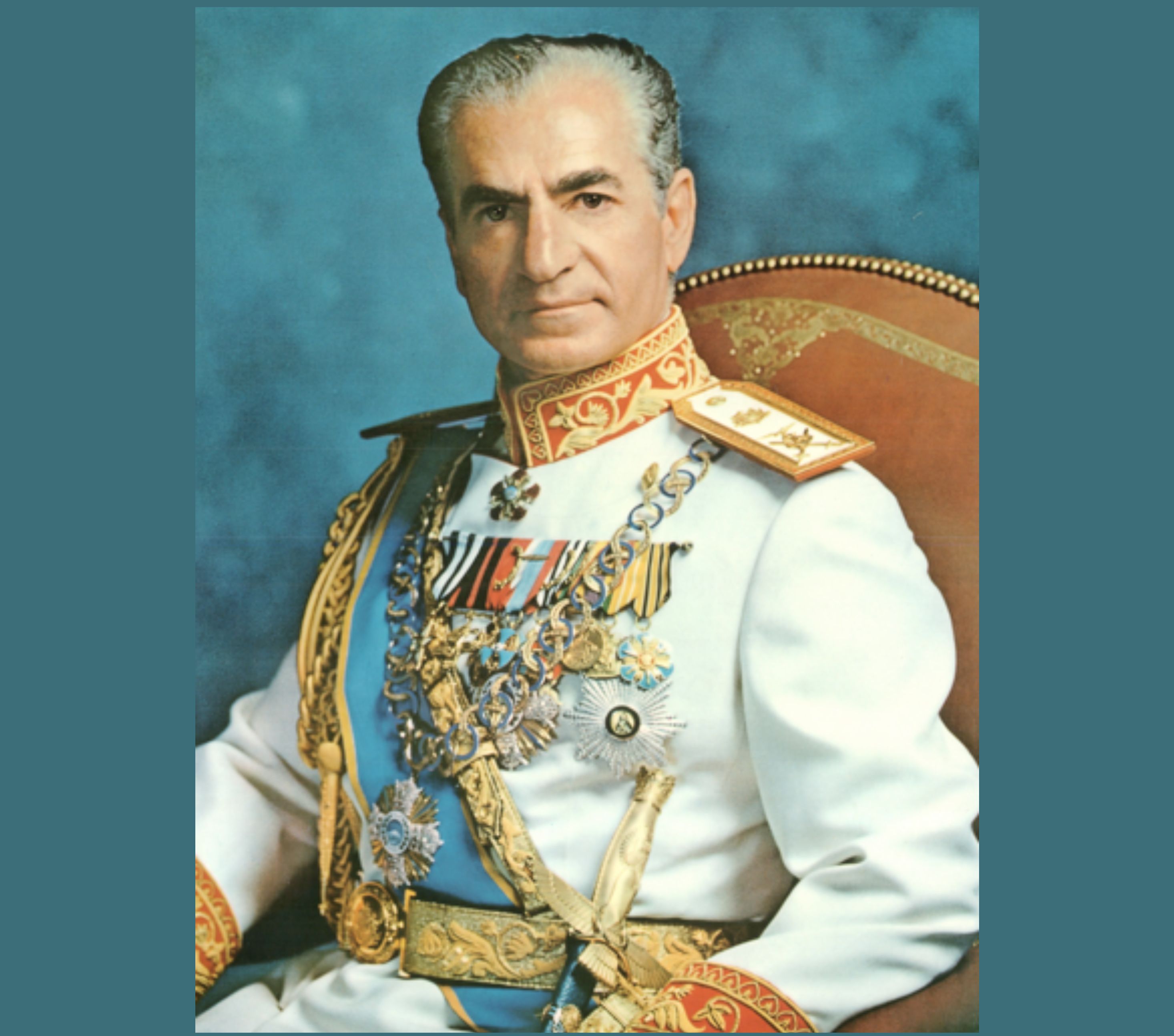

The Shah’s Iran (1953-1979) forged strategic oil, military, and nuclear ties with South Africa’s apartheid regime, helping the latter survive international sanctions. This relationship, driven by mutual economic interests, only ended with the 1979 Iranian Revolution, after which the new government supported the anti-apartheid movement.
The Beginning of Rapprochement and Diplomatic Exchange
In the late 1960s, the Shah's regime turned its attention towards West and South Africa, where the apartheid government was of particular interest to Iran due to its close ties with "Israel" and Australia, as well as its possession of an advanced industrial base. However, the Iranian government at the time, in view of world public opinion, wished to keep these relations secret, similar to the friendly relations it had established with "Israel," which resulted in security, military, and agricultural cooperation.
On the other hand, the apartheid government in South Africa was very welcoming of this cooperation, seeing it as serving the interests of its fascist colonial regime at a time when international hostility towards apartheid policies was escalating, and establishing friendly relations with a major oil producer like Iran was desirable. At the same time, most independent African countries were seeking to isolate the apartheid regime.
Under pressure from these countries, and with the support of a number of Asian nations, South Africa was expelled from the Commonwealth in 1961, the same year, Egypt, under the leadership of Gamal Abdel Nasser, broke relations with it. The Organization of African Unity, founded in 1963, also called for a comprehensive boycott,[1] and African countries led calls at the United Nations to impose sanctions on it, including halting oil supplies and arms.
The foreign policies of both the apartheid regime and the Shah's Iran showed a number of commonalities. Both governments were anti-communist, worried about Soviet expansion, and engaged in confrontations with Soviet-backed insurgencies in neighboring countries. The fascist apartheid regime was fighting in Angola, while the Shah's Iran was waging a war in Oman. Both regimes maintained friendly relations with "Israel," were at odds with the Non-Aligned Movement, and each had tense relations with its regional surroundings: South Africa with southern African countries, and Iran with its major Arab neighbors, particularly Iraq and Egypt.
At the same time, the two regimes benefited from each other. Iran needed industrial goods, while the apartheid regime had a particular need for a reliable source of oil supplies. Later in 1969, Frikkie Botha (a National Party politician and diplomat who held several ministerial positions during apartheid) accompanied Hendrik Samuelz, the head of the Armaments Corporation of South Africa (Armscor), on a visit to the Zionist entity for talks with General Moshe Dayan. Botha used this trip to visit Tehran at the Shah's request that he be an official guest of the government.
Following this, a delegation of officials from the National Iranian Oil Company visited South Africa. Two months later, military General Charles Alan Fraser went to Tehran to participate in a camel safari, and the Shah ordered that he be received with a full official ceremony and transported to Shiraz and Isfahan as an official guest of the government. During the visit, the Shah put forward a proposal to him: since South Africa and Iran had established trade relations, and since Iran had a premises in Johannesburg, the two countries should also establish diplomatic relations. Given the sensitivity of dealing with the apartheid regime, the Shah sought advice from American, British, Japanese, and Lebanese diplomats accredited in South Africa.[2]
The Japanese Consul General informed the Shah of the formula his country had adopted, as Japan only maintained a consulate general in Johannesburg. The Consul General held the rank of ambassador and was accredited as ambassador to Botswana, Lesotho, and Swaziland, former British protectorates that were economically dependent on the apartheid regime occupying South Africa. The Iranians then chose to follow the Japanese model,[3] as it allowed a margin that took into account world public opinion on the apartheid issue, while simultaneously maintaining high-level contacts with South Africa.
John Oxley was the first Consul General representing the apartheid regime in Iran, holding the rank of ambassador. He was considered the only diplomat for the apartheid government with political experience in the region, having served in Egypt until Gamal Abdel Nasser ended relations with the apartheid regime in 1961. Upon arrival, Oxley first stayed in a hotel for nine months and spent considerable time searching for a suitable house and office. He noted that the Iranians treated him with the utmost cordiality and that he had direct contact with the Shah and other members of the royal family. He held this position from 1971 until 1973, when he was replaced by General Charles Alan Fraser.
On the Iranian side, Ahmad Tehrani held the consulate position, succeeded by Sotoudeh, and then Mohammad Rashti, who spent only a few months in his post until relations ended with the Iranian Revolution. Given the multifaceted nature of South African society, the Iranian mission was in contact with several parties outside the government. These relations included the broader Indian community in Durban and Johannesburg, as well as the Jewish community, and especially the "Israeli" consul. The Shah's Iran considered this relationship influential in trade, banking, and business circles. The Jewish community in South Africa included a number of people who had emigrated from Iran, some of whom were closely connected to the consulate general, including Jack, Fred, and Joseph Shamaun, brothers from a Baghdadi Jewish family who moved to Iran and obtained Iranian citizenship, later moving to South Africa. One of them became the representative of the Iranian National Carpet Company in South Africa, while another became an exporter of South African steel to Iran.[4]
During the 1970s, high-level visits took place between Iran and South Africa. In 1971, the head of the apartheid regime, Jacobus Fouché, attended the Persepolis celebrations, the lavish celebrations organized by Shah Mohammad Reza Pahlavi at the ancient city to mark the 2,500th anniversary of the founding of the Persian Empire, wearing his traditional formal Afrikaner hat. This invitation was interpreted in South Africa as a departure from the international isolation the regime was increasingly facing.[5] These visits were not without controversy inside Iran; on November 26, 1973, the Minister of Court, Amir Asadollah Alam, discussed with the Shah an upcoming visit by the Mayor of Johannesburg. Prime Minister Amir Abbas Hoveyda had ordered that the visit not be mentioned on the radio out of consideration for African sentiments, but the Shah instructed him to tell the Prime Minister that this was none of his business.
This was followed by a more significant visit in June 1974, when the apartheid regime's Minister of Economic Affairs, Owen Horwood, visited Iran, resulting in him signing a secret cooperation protocol with the Iranian Minister of Industries and Mines, Farrokh Najmabadi. Visits also took place in the opposite direction; in May 1974, the Speaker of the Iranian Parliament, Jafar Sharif-Emami, visited South Africa. On September 24, 1976, Princess Shams Pahlavi unveiled a statue of her father in the Mountain View area of South Africa, as part of the celebrations for the 50th anniversary of the Pahlavi dynasty.[6] At that time, as revolutionary fervor was reaching its peak in Iran, South African Foreign Minister Pik Botha offered assistance to strike the communist movements and cells that were active in Iran then.
Economic Relations
In the 1960s, with the Shah's decision to transform the National Iranian Oil Company (NIOC) into an international company operating on a global scale, initial cooperation with the apartheid regime occupying South Africa emerged among the steps considered in this direction. In 1969, NIOC signed an agreement with the South African Oil and Gas Company (Sasol) and the French company Elf Aquitaine, later renamed "Total," to build a refinery in Sasolburg, South Africa, named Natref, and to supply it with crude oil for 20 years after start-up.
Ownership of Natref was distributed as 17.5% for NIOC, 52.5% for Sasol, and 30% for Total of France. Iran brought in 400 skilled workers to build the refinery, which was designed to process light crude oil. Its opening in 1971 was attended by Manouchehr Eghbal, the head of NIOC.
The importance of this initiative became evident in November 1973, when Arab states succeeded in persuading all African countries south of the Sahara, except four, to break diplomatic relations with the Zionist entity. This came in exchange for expanding the Arab oil embargo against the West to include the fascist occupation regimes in South Africa, Rhodesia, and Portugal. The Shah did not join any of these embargoes; instead, he exploited the resulting shortage to push oil prices to higher levels on the world market.[7] The Arab oil producers ended the oil embargo imposed on the West but kept it in place against the apartheid regime in South Africa, and in 1977 they were followed by all members of the Organization of Petroleum Exporting Countries (OPEC), except Iran. Thus, between 1974 and 1978, Iran provided about 90% of South Africa's crude oil imports, a declared figure that rose to 96% in late 1978.
Unsurprisingly, Iran faced criticism for its cooperation with South Africa at a time when international sanctions against it were escalating. The Shah always responded that Iran's long-term national interest took precedence over any other humanitarian considerations. In April 1974, the Shah told the French magazine Deane Afrique: "We cannot sacrifice our country's long-term interests for the sake of emotional sentiments."
During that period, the Iranian Revolution was approaching its peak, and Iranian oil workers were engaged in widespread strikes that practically affected oil supplies to South Africa more than any official embargo. At the same time, the rise in oil prices following the 1973 Arab embargo expanded energy sector relations between Iran, South Africa, and France to include nuclear cooperation starting in 1974. That year, the Atomic Energy Organization of Iran was established, at a time when uranium enrichment capability was effectively limited to nuclear-weapon states, granting those states significant control over nuclear fuel supplies to countries like Iran seeking to develop civilian nuclear programs. Since the United States, the Shah's main ally, showed no willingness to provide enriched uranium to Iran, the Shah turned to France, which had itself begun expanding its nuclear program after the 1973 oil shock.
In June 1974, the Shah's Iran and France signed a nuclear cooperation agreement, under which Iran obtained a stake of nearly 10% in Eurodif, the Franco-European company responsible for uranium enrichment and nuclear fuel production. At the same time, France had also begun nuclear cooperation with the apartheid regime in South Africa, which was itself seeking to secure uranium sources for its nuclear reactors and its secret nuclear weapons program. Thus, a kind of strategic interlinkage crystallized between Iran, France, and the apartheid regime in South Africa, becoming an important framework for the development of nuclear energy policies at that stage.
It is worth noting here that France played a pivotal and historic role in building the Zionist military nuclear capability in the 1950s and 1960s, providing the expertise and technology necessary for developing Zionist nuclear capabilities, including contributing to the construction of the Dimona reactor and crossing the nuclear threshold.
In June 1974, the Shah's regime and the South African government reached understandings for nuclear cooperation, and economic contacts between the two sides continued in the oil and uranium sectors. In October 1975, the South African Minister of Mines and Energy visited Iran, and the discussions resulted in a major financial agreement stipulating Iranian participation in an industrial uranium enrichment project, in return for receiving long-term supplies of crude oil. This type of economic arrangement was considered a source of concern in some Western circles because it opened the door for Iran to obtain independent uranium sources outside the direct control of the major nuclear powers.
In 1976, Iran purchased a stake of nearly 15 per cent in the Rössing uranium mine in South West Africa (now Namibia), which was operated by the Anglo-Australian company Rio Tinto, and that territory was then under South African administration under the apartheid regime. The mine began production the same year, becoming one of the important sources of uranium in the world market.[8] However, the Shah did not show much interest in intervening in other mining projects in Africa unless they were directly linked to Iranian interests. For example, in February 1976, white businessman H.F. Oppenheimer, associated with the apartheid regime, visited Tehran to discuss the possibility of Iranian participation in a mining project in Zaire (Democratic Republic of Congo), but the Iranian leadership was not very enthusiastic about this proposal.
In general, the triangular relationship between Iran, France, and South Africa was based on an exchange of interests in the energy sector, as Iran exported oil to South Africa, while receiving uranium supplies in return, and part of this uranium was enriched in France for use in Iranian nuclear reactors.[9] To strengthen these arrangements, Iran also sought to invest in some institutions linked to the nuclear fuel production chain, which raised concerns in the United States, which was monitoring the expansion of the Iranian nuclear program's autonomy at that time.
The joint ventures in oil and uranium led the apartheid government to propose establishing a mining training center in Iran. The Shah welcomed the proposal and sent three engineers to South Africa for training. In 1973, a School of Mines was established in the Iranian town of Shahrud,[10] and the apartheid regime equipped it and funded part of its costs. Over time, the friendly relations between the two regimes developed to the point that the apartheid government prioritized its trade with Iran. In 1976, the construction sector in Port Elizabeth almost came to a standstill, with several small construction companies going bankrupt and workers being laid off, as a result of the apartheid regime prioritizing a shipment of 1.5 million tons of cement to Iran.[11] During this period, four Iranian economic delegations visited South Africa, and the tourism sector also grew, supported by active airline routes, as both South African Airways and "Israeli" airlines used Tehran as a stopover point for their flights.[12]
Military Cooperation
As a result of the Ba'athist current coming to power in Iraq in 1968, relations between Iraq and the Shah's regime became tense. The Iranians were keen to know the types of weapons the Soviets were supplying to Iraq. Also, Russian ships had to sail around the Cape of Good Hope after the Suez Canal was closed since the June 1967 War. At that time, an American official told the Consul General in Tehran that elements of the apartheid regime were taking precise aerial photographs of all Soviet ships passing around the Cape of Good Hope and handing them over to Washington. He suggested that he ask these officials to share the photos with them, which they agreed to.[13]
By the late 1960s, the Shah had developed a strategic interest in the Indian Ocean. Britain withdrew from east of Suez in 1968, left the Gulf in 1971, and closed its other bases in the Indian Ocean by 1977. In contrast, the Soviets developed an increasing naval presence in the Indian Ocean (in Iraq, Somalia, and Aden), which worried the Shah, as all Iranian oil exports passed through the northwestern quadrant of the Indian Ocean.
Iranian oil revenues also increased in 1971, giving the Shah the capacity to expand the Iranian navy in the Indian Ocean to counter Soviet expansion. For this reason, in mid-1972, after talks in South Africa between the Iranian Navy Commander, Admiral Farajollah Rasai, and the South African Navy Chief, Vice Admiral James Johnson, the two regimes signed a cooperation agreement, followed by the stationing of a representative of the Iranian navy in South Africa.[14]
On November 28, 1972, the Shah proposed a tripartite alliance between Iran, Australia, and South Africa, but he concluded that persuading the Australians to cooperate would not be easy. Given the close relationship that had developed between Iran and the apartheid regime occupying South Africa in military and energy affairs, the two regimes sought to convince America and Europe to establish an anti-communist alliance in the southern hemisphere by arming local right-wing reactionary forces.[15]
The Shah's Regime's Position on Fascist Apartheid Policies
Before the opening of the Iranian consulate in South Africa in 1970, the Shah's regime decided to address the issue of apartheid directly with the apartheid government. The first issue related to the racial classification of Iranians. The apartheid regime assured the Shah that the South African government considered Iranians Aryan. Subsequently, the Iranian consulate in Johannesburg informed the South African side that the Consul General reserved the right to invite non-whites to official events. The official policy of the apartheid regime stipulated that if non-whites attended official functions, government officials would not participate. In this instance, the consulate of the apartheid regime in Tehran was informed that Iranian Foreign Ministry staff would not attend the reception, forcing the apartheid government to acquiesce to this position.[16] However, this was not a position of solidarity on the part of the Shah's regime, but rather a concern for the interests that bound it to a number of African countries, particularly Senegal and Zaire (Democratic Republic of Congo).
The vote of the Iranian delegation at the United Nations on apartheid followed a cautious position, condemning the apartheid regime in diplomatic discourse, but stopping short of a complete break or imposing strict measures against it. Despite the assurances, Iranians did face racial discrimination in South Africa, despite being classified as "white," especially the workers and technicians from the National Iranian Oil Company who came to complete work on the Natref refinery.
The Impact of the Iranian Revolution on South Africa
The Iranian revolutionaries, whether leftist, Islamist, or nationalist, were united in their steadfast hostility towards the apartheid regime, and leftist intellectuals paid particular attention to South Africa. An example of this is the short story "The Antique Room" by the famous Iranian writer Houshang Golshiri, which depicts the meeting of Pari, an Iranian woman living in Johannesburg, with a white South African man named Johnny, who falls in love with her and wishes to marry her. The story focuses on the characters' internal conflicts under the apartheid regime, reviews the challenges facing racial relations between Iranians and whites in South Africa, and highlights the sense of alienation and search for identity among Iranian immigrants in a city dominated by racial discrimination, offering a social and political critique of the apartheid system using literary language rich in symbols.
In those years, works from South African theater were shown in Tehran, directed by the leftist director Rokneddin Khosravi. In 1975, he directed Hello and Goodbye at the Iran-America Society in Tehran, and then in May 1978 he directed Sizwe Banzi Is Dead, which garnered wide acclaim. Khosravi stated that the play's characters, their hopes, and their sufferings resemble our reality, taking into account the factor of racial discrimination and the struggle of the black revolutionary cause against apartheid.
The Iranian Revolution and Muslims in South Africa
The small Muslim community of Asian origin in South Africa closely followed events in Iran. Under the apartheid regime, most Muslims in South Africa were classified as "Coloured" (in Cape Province) or "Indian" (in Natal and Transvaal). Until the early 1970s, most of their religious leaders were not engaged in the struggle against apartheid, although some individuals were active in the African National Congress (ANC), and some even held leadership positions within it.
The thought of Ali Shariati (1934–1977), and his pivotal role in crystallizing a revolutionary social and political Islamic consciousness in Iran, and developing what is termed "Iranian political Islam," had a significant impact on the growth of activity and the rising tendency towards protest among some Islamic leaders within black revolutionary movements. Shariati's friends in the United States, particularly Ebrahim Yazdi in Texas, played a pivotal role in founding the Muslim Students Association (MSA), which brought together Muslim students from various parts of the world in American universities. In the mid-1970s, these activists in exile organized the translation of Shariati's writings into English. Members of the South African Muslim Students Association brought them back to their country, where young Muslims read them eagerly, dissatisfied with their religious leaders' passive stance after the Soweto uprising events in 1976.
Shariati's popularity among Muslim students in South Africa, whose numbers tripled between 1960 and 1970, was based on his outspoken attack on the ruling class, including the religious scholars (ulama), and his analysis of power relations based on his Islamic intellectual vision, without conflicting with Marxism. Perhaps among his contributions present in the political Islamic culture in South Africa is his reinterpretation of the concepts of sacrifice and martyrdom, which for Shiites are linked to the idea of all Imams being martyred by unjust rulers, from an intellectual and philosophical-scientific perspective.[17]
Relations After the Fall of the Shah
After the Shah left Iran in early 1979, Consul General Fraser left Tehran fearing for his life due to his close relationship with the former regime, while the rest of the consulate staff remained. The new authorities in Tehran canceled the nuclear cooperation agreement between the two regimes, but did not pay much attention to the remaining whites, who panicked when the American hostages were taken and left carrying only their personal belongings. John Sunde remained alone in Tehran until the end of 1980 to disentangle the remaining relations. However, an infrastructure had arisen between the two regimes that allowed sanctions to be bypassed. In 1981, during the first Gulf War, the apartheid regime began exporting arms to Iran, and the Islamic Republic government agreed to purchase them for $750 million. In return, the apartheid regime bought crude oil of the same value. What the Iranians likely did not know was that South Africa was also trading arms for oil with Iraq.[18]
From South Africa's perspective, the most direct impact of the unrest in Iran was the uncertainty regarding future oil supplies. By the late 1970s, over 90 per cent of the oil imported by South Africa, whether for domestic consumption and storage or re-export (to Lesotho, Swaziland, Botswana, as well as Rhodesia, which was then under sanctions), came from Iran.
Nevertheless, between 1979 and 1987, at least 36 Iranian oil shipments reached South Africa, totaling over 9 million tons. The Islamic Republic was bound by its 17.5 per cent share in the Natref refinery,[19] while the apartheid government did its utmost to complicate Iran's sale of its share. Iran was unable to end dealings with what an official statement described as ridding itself of the "unholy legacy of the former regime" until 1989.
Iranian Relations with the African National Congress
On February 13, 1979, just two days after the final victory of the Iranian Revolution, the President of the African National Congress, Oliver Tambo, sent a message from his exile in Mozambique to Tehran: "On behalf of the African National Congress and the oppressed masses of South Africa, we express to you our immense joy at the glorious success of the Iranian Revolution. Your victory demonstrates the irresistible power of a people united in the pursuit of a just cause. Your historic victory has shattered the infamous conspiracy of Reza Pahlavi and Vorster-Botha against our peoples, which guaranteed the racists control over our land. Therefore, your victory is a tremendous contribution to the success of our struggle against a brutal fascist racist dictatorship. The African National Congress joins all progressive forces in the world in celebrating your achievement and welcomes the new state into the ranks of anti-imperialist and anti-racist nations. We salute the heroic people of Iran, and we lower our flags in honor of the martyrs who fell to achieve victory, for their blood has forged bonds of solidarity between us in the common struggle for a just world. Long live the great Iranian Revolution."[20]
In July 1992, under the direction of President Ali Akbar Hashemi Rafsanjani, Nelson Mandela paid an official three-day visit to Tehran, accompanied by Imam Hassan Solomon, a progressive Islamic cadre and member of the African National Congress. The Iranian government assured Mandela of its continued support for the South African people's struggle against apartheid. Mandela was also awarded an honorary doctorate from the University of Tehran, becoming the first foreigner to receive this honor since the victory of the revolution in 1979. Official diplomatic relations were re-established on May 9, 1994, the day before Mandela was inaugurated as President of the Republic of South Africa.
Mandela and ANC members were constantly under international pressure, especially from the US, demanding that South Africa cut ties with countries that had supported its struggle, such as Cuba, Libya, and Iran. But he refused to comply, affirming that loyalty to comrades who had provided genuine support was not a luxury but a revolutionary duty. His stance revealed his firm vision that freedom can only be built through loyalty to principles and friends who fought with him against injustice and oppression, and that any external pressure would not shake his determination to defend his historical alliances.
Kribsoo Diallo is a Cairo-based Pan-Africanist researcher in political science related to African affairs. He has written for many African magazines and newspapers, and Diallo has contributed to translated editions of papers and articles in Arabic and English for several research centres within the African continent.
*This article was originally published in Arabic on باب الواد (babelwad.com).
https://babelwad.com/article/ayran-almlky-ognob-afrykya-dor-alshah-fy-atal-aamr-ntham-alfsl-alaansry
Endnotes
[1] Organization of African Unity, Resolutions on Apartheid and Liberation Movements in Southern Africa, Addis Ababa, 1963–1970.
[2] Hough, M. and van der Merwe, M., Selected Official South African Strategic Perceptions 1976–1987 (Institute for Strategic Studies, University of Pretoria, 1988).
[3] Marc Ecard du Saint-Paul, Japan and Africa: The Genesis of an Atypical Relationship (Paris: CHEAM, 1999).
[4] Arlene Dallalfar, "Iraqi Jews in Iran," in Houma Sarshar (ed.), Esther's Children: A Portrait of Iranian Jews (Beverly Hills: Center for Iranian Jewish Oral History, 2002).
[5] Deon Geldenhuys, The Diplomacy of Isolation: South African Foreign Policy Making (Johannesburg: Macmillan, 1984).
[6] Ruhollah K. Ramazani, Iran's Foreign Policy 1941–1973.
[7] Robert B. Stobaugh, "The Evolution of Iranian Oil Policy," in Iran Under the Pahlavis (Stanford: Hoover Institution, 1978).
[8] Eamonn Frank, "Joint Nuclear Project for South Africa from France," Journal of African Development, 8(9), 1974.
[9] Gholam Reza Afkhami (ed.), The Iranian Atomic Energy Program (Bethesda, Maryland: Iran Books, 1997).
[10] Nader Barzin, Nuclear Iran (Paris: L'Harmattan, 2005).
[11] Chehabi, H. E. (2016). South Africa and Iran in the Apartheid Era. Journal of Southern African Studies, 42(4), 687–709. http://www.jstor.org/stable/43901148
[12] Sasha Polakow-Suransky, The Unspoken Alliance: Israel's Secret Relationship with Apartheid South Africa (New York: Pantheon, 2010).
[13] Mohammad Reza Jalili, "The Evolution of Iranian Policy in the Indian Ocean," (1976).
[14] Deon Geldenhuys, The Diplomacy of Isolation: South African Foreign Policy Making (Johannesburg: Macmillan, 1984).
[15] Shahram Chubin and Sepehr Zabih, The Foreign Relations of Iran: A Developing State in a Zone of Great-Power Conflict (Berkeley: University of California Press, 1974).
[16] Peter Koerner, South Africa Between Isolation and Cooperation: Economic, Political, and Military Cooperation of the Apartheid State with Semi-Metropolitan Countries (Hamburg: Institute of African Studies, 1981).
[17] Ebrahim Moosa, "Islam in South Africa," in Nehemia Levtzion and Randall Pouwels (eds.), The History of Islam in Africa (Athens: Ohio University Press, 2000).
[18] Michael B. Bishku, "South Africa and the Middle East," Middle East Policy Review, Volume 17, Issue 3, 2010.
[19] David Fig, Oil, Arms, and Isolation: South Africa's Sanctions Evasion (Johannesburg: Jacana Media, 2005).