


Pambazuka Opposes Fraudulent Electoral Processes in Africa
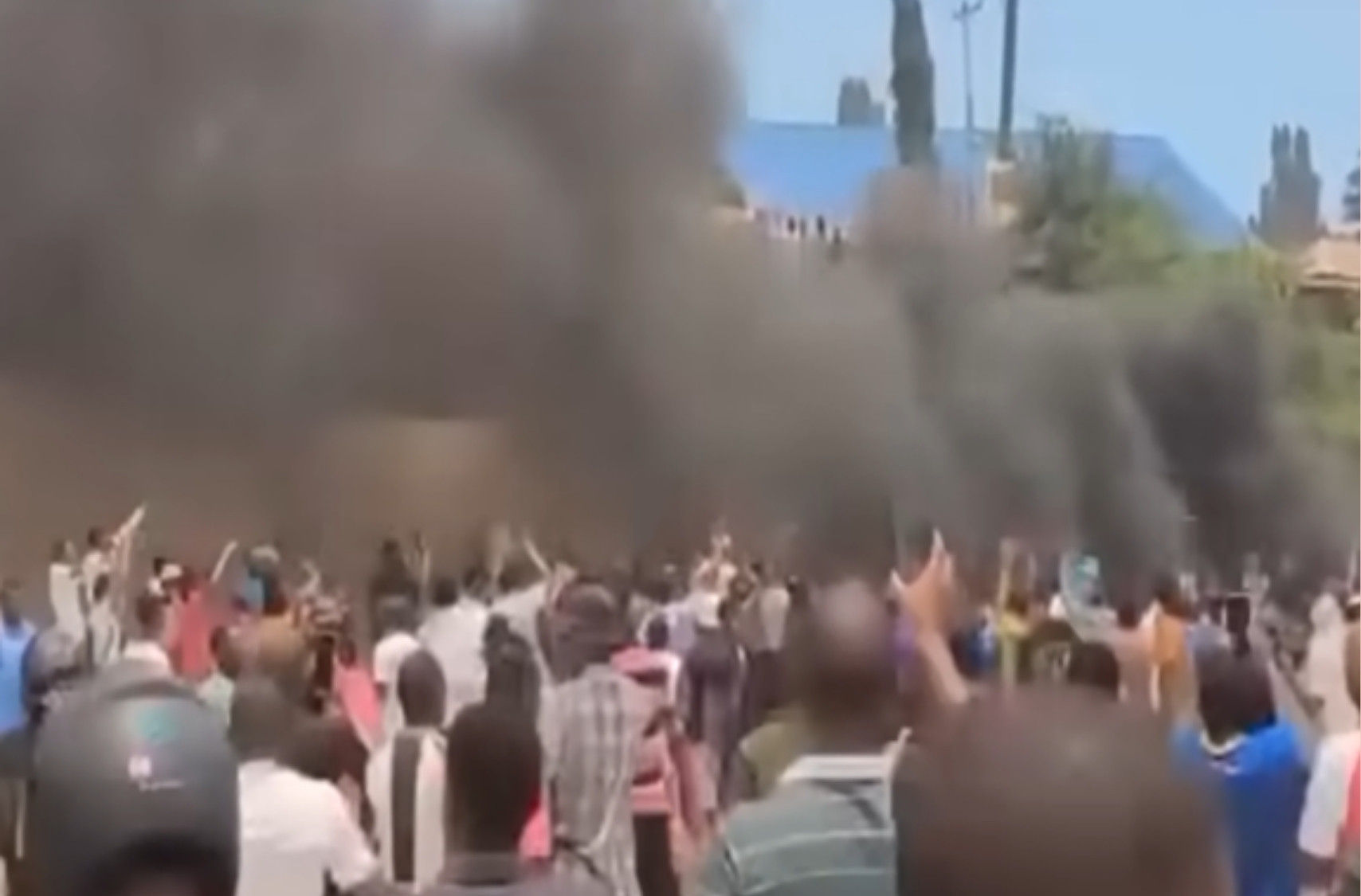
Pambazuka News denounces the fraudulent October elections in Cameroon, Côte d’Ivoire, and Tanzania and the continent-wide erosion of democratic practices and legitimacy.
Elections, while reducing democracy to a 4 to 7-year queuing to cast votes, remain a major political exercise in the selection of leaders in Africa and other parts of the world. In many cases, however, the votes do not matter in the selection of leaders in Africa and the rest of the world claiming to practice democracy.
Where systems have been put in place, “miraculous” technical hitches have ensured that systems do not work to produce results that reflect the votes in polling stations and coalition centers. In others, it has been the vigilance of the youths who remained in polling stations and coalition centres to stop the introduction of any foreign ballot boxes and papers that might be stuffed to the results from various voting centres to thwart the will of the peoples in those countries.
Pambazuka expresses deepest disappointment and condemnation for the cheapening of democracy in Africa in the name of elections.
We strongly oppose the fraudulent electoral processes that have taken root in Africa and manifested, especially in October 2025, as well as the signs of their continuity from Central to West to East Africa.
The processes leading up to the elections in Cameroon, the Ivory Coast, and Tanzania are a mockery of democracy and genuine participation by the people. The lack of transparency to ensure that votes counted in the various polling stations accurately reflect in the coalitions in these nations, the state-enforced exclusion of leading opposition figures, fear and intimidation are a shame to the leaders who claim to represent their people and use elections to legitimize their regimes. In the end, it is as though leaders in these nations wish to insist that “I will represent the people on my own terms even if the people have had enough of me.”
It is clear from such posturing that the leadership of the countries where these elections have been staged are not interested in ruling with the mandate of their people, but with force and with the consent of external forces that propped up their continual rule with such force. The internal-external compradorial relationship that foregrounds fraudulent elections ensures that the destinies of the working peoples, youths, women, children, and men outside the ruling elites are traded at the table of aggrandizement for power and the interest of foreign powers who control African resources.
Cameroon
- The results of the Cameroon elections held on 12 October 2025 are an outcome of a fraudulent electoral process that deserves the strongest condemnation.
- Transparency in an election requires that the people have access to the electoral results and can follow the proceedings from the polling stations to coalition spaces without intimidation and fear.
- The violent repression of protests that followed the elections reveals a regime willing to brutally crack down on anyone who challenges its desire to perpetuate power and enjoy its allure. Since 1982, Paul Biya has ruled Cameroon and become the “King-type” leader the peoples in that country have known for over 4 decades, for those less than 40 years all of their lives. The oldest head of state, however, has been living in Geneva, raising questions about whether the 92-year-old president is the one in charge of the country. Or are the closest allies hiding their faces behind Biya to enjoy the resources of the state while the masses in the country struggle with basic living conditions? The declaration of Biya as the winner for an 8th term will see him remain Cameroon’s president until age 97 and perhaps send the country into a gerontocracy of a centenarian, depending on how long progressive forces can withstand and overcome the militarism and repressive forces of the state.
- We share in the struggles of the Cameroonians in the quest for change in the management of the country and to secure decent lives for the many making basic demands from the running elites to improve the living conditions of the people.
- The nature of the electoral process in the Ivory Coast, culminating in the polls on 25 October 2025, is reminiscent of the power-grabbing and attempts to perpetuate rule, which have been a bane of democracy in several parts of the continent.
- Ouattara had overturned the constitutional limits for his tenure, which would ensure that he could follow the footsteps of Paul Biya of Cameroon. Having succeeded in barring political rivals from participating in the elections, he was set to continue his rule without any viable opposition.
- The 83-year-old Alassane Oauttara was declared the winner on 28 October 2025 with a 90% vote in an election marred by a massive boycott to begin a 4th term in power.
- We solidarize with the peoples in the Ivory Coast who are demanding respect for constitutional limits and transformation in their living conditions.
- We observe with concern the development in Tanzania in the lead-up to the upcoming elections in the country, conducted on 29 October 2025.
- For a country that provided the organising front to fight repression in the southern African region, we decry the decline of the state toward varied forms of oppression against dissenting views.
- Tanzania's abductions, disappearances, torture, killings, exclusion and jailing of opposition leaders and activists aimed at maintaining the rule of the Chama Cha Mapinduzi is another slap in the face to democratic participation in Africa.[1]
- Human Rights Watch and Tanzanian human rights organizations, including The Legal and Human Rights Centre and Tanzania Human Rights Defenders Coalition, respectively, recorded 100 abductions and enforced disappearances cases within the last decade (2015 and February 2025), and 48 attacks on activists, human rights defenders, and others in 2024.[2]
- The fear, the insecurity and the political situation of the country, an “increasingly hostile environment for political participation, free expression, and independent journalism in the run-up to the 2025 elections”,[3] ensured that considerable numbers of the over 37 million eligible voters were disenfranchised. As the ruling party suppressed the opposition and some voters boycotted the elections, the outcome defeats the tenets of democratic practices while excluding the people from determining who rules them.
- In the midst of the frustrations and repressions by the security apparatuses in Tanzania, there is an increasing call from the people for military intervention. We strongly oppose militarising the Tanzanian state but support the people's rights and struggles for freedom of expression, and fight against the dictatorship and repressive rule.
- The reports and voices of Election observers have been increasing in Africa in the last few years. These reports, irrespective of their institutional and personal sources, provide legitimacy for elections across the continent.
- We are wary however of election observers legitimising fraudulent elections in Africa
- We encourage democratic participation beyond elections. African participation in any democratic arrangement should not be reduced to periodic elections that mark the start and end of regimes. Citizens should have the tools and avenues to engage the leadership of their country and become involved in decision-making.
- We support people's organizations and others supporting democracy in Africa. We recognize and share in the day-to-day struggle for democratic rights, especially among the youth on the continent.
Ivory Coast
Tanzania
Election Observers
On Democracy
Election protests have characterized the October elections in Cameroon, the Ivory Coast, and Tanzania. These protests reflect the frustrations of people with the electoral processes in these countries and others in Africa.
Democratic participation, not “electionism”, should anchor the nature of leadership selection and legitimation on the continent and its constituencies elsewhere. Africans must have a say and their voices must determine who rules them, who makes decisions that have consequences for their destinies, who represents them at every level, and have avenues for direct involvement in the political, social, economic, and other spheres of their societies.
Endnotes
[1] https://www.theeastafrican.co.ke/tea/news/east-africa/act-wazalendo-mpina-back-on-ballot-after-court-overturns-ban-5189876; See also Human Rights Watch, https://www.hrw.org/news/2025/09/29/tanzania-deepening-repression-threatens-elections; On Lissu and Chadema see https://www.reuters.com/world/africa/tanzania-court-charges-opposition-party-leader-with-treason-2025-04-10/, and https://www.reuters.com/world/africa/tanzania-opposition-leader-arrested-rally-his-party-says-2025-04-09/
[2] See the reports here: Tanzania Human Rights Report, https://humanrights.or.tz/en/post/resources-center/thrr2024report, and Tanzanian Human Rights Coalition https://thrdc.or.tz/reportsfiles/SITUATION%20REPORT%20ON%20HRDS%20%26%20CIVIC%20SPACE%20IN%20TANZANIA%202024.pdf