


A New World Demands New Vision
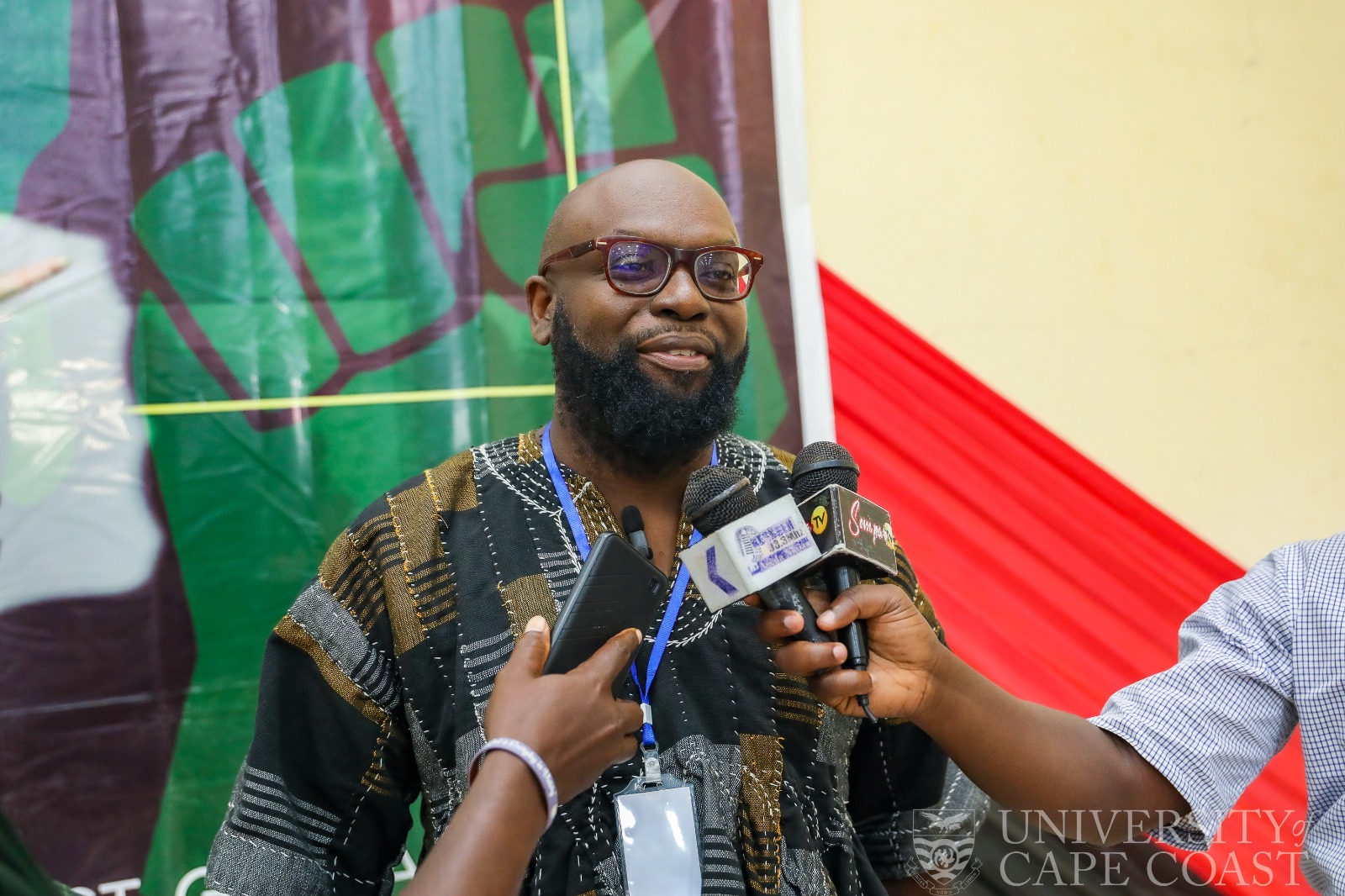
Address on May 23, 2026, delivered at the African Liberation Day celebration in Cape Coast, Ghana, themed Global Africa, Reparative Justice and International Law, and organized by the Global Pan African Movement and the Centre for African and International Studies, in association with the Central Region African Ascendants Association of Ghana, The Real Ghana Foundation, and PANAFEST Foundation.
Welcome
All protocols observed.
We are standing on the most consequential ground on earth for this conversation.
Welcome to the 2026 African Liberation Day Celebration, hosted by the Centre for African and International Studies in partnership with the GPAM[1], CRAAAG[2], The Real Ghana Foundation, and PANAFEST Foundation. African Liberation Day, observed every 25th of May, honours a freedom struggle that did not begin with the founding of the Organisation of African Unity in 1963 — it stretches back through centuries of resistance to slavery, colonialism, and genocide. The OAU gave that struggle institutional form and continental voice. But the fighters came long before.
This afternoon, we gather not merely to remember but to reckon. Our theme is: “Global Africa, Reparative Justice and International Law.” I want to take you through the history that makes reparative justice a moral and intellectual necessity — and to share the work this Centre is doing to place Global Africa, and UCC[3], at the heart of what comes next.
Before the Atlantic: What Slavery Actually Was
We must begin with a word. The word “slave” does not come from Africa. It comes from “Slav” — the name of Eastern European peoples who were, for centuries, among the primary victims of enslavement in the ancient and medieval world. Until the 1800s, the majority of people held in bondage across recorded history were Europeans and Asians. There were millions of Europeans enslaved across North Africa. Slavery, in its origins, was not an institution centred on blackness. What the transatlantic slave trade introduced was something new: an ideology that made blackness itself the mark of bondage.
The transatlantic slave trade changed all this. At least twelve million human beings were taken from Africa over four centuries. But the numbers, staggering as they are, are not the full story. The deeper crime was not only the horror of chattel slavery but the ideology invented to justify it.
European enslavers faced a moral problem: they were peoples who knew, at some level, that they were enslaving human beings like themselves. Their solution was to declare that Africans were not fully human. The doctrine of African as sub-human was not the cause of the slave trade. It was manufactured in its service. And once manufactured, it spread everywhere.
That ideology did not stay on the plantation. It travelled. It entered science, law, medicine, philosophy, and religion. It became the lens through which the entire world was taught to see African people. The view of Africans as less than fully human — as primitive, as inferior, as the bottom of the human hierarchy — is not an ancient prejudice. It is a modern invention, born in the fifteenth century to justify profit, and it is the direct ancestor of every form of anti-Black racism that exists on this planet today. When an African nation is treated as incapable of governing itself, when African knowledge is dismissed as not being real knowledge — that is the transatlantic slave trade still speaking. The chains may be gone. The ideology remains.
Eric Williams and the Chain That Connects Everything
The Trinidadian scholar Eric Williams showed us, in his landmark work Capitalism and Slavery, that the Industrial Revolution was built on the backs of enslaved Africans. The profits of the slave trade and the plantation economies it sustained were the primary engine of the capital accumulation that funded British industrialisation.
And then the logic turns even more devastating. The Industrial Revolution — built on enslaved African labour — generated the capital and industrial power that made European colonialism possible at scale. The wealth extracted from African people in the Western Hemisphere financed the machinery used to colonise the very continent those people had been stolen from.
Africa did not suffer slavery and then colonialism as two separate wounds. The second wound was funded by the profits of the first. The colonisation of Africa was financed, in no small part, by Africa itself — by the labour of its stolen children. This is not a metaphor. It is history. It is political economy. And it is the foundation of the world we have inherited.
Africa Was Already Global — The Colonial Lie
There is a lie — still taught, still believed — that Europe brought Africa into the global world system. That before European contact, Africa was isolated, primitive, and waiting to be connected to civilisation. Let us bury that lie here, in Cape Coast, today.
The Kingdom of Bono — one of the early states in what is now Ghana — was trading gold to the Mali Empire before most European nations ever visited West Africa. Mali’s gold and salt trade connected through the Sahara to North Africa, and from there to Europe and Asia. Ghana was already fully integrated into the global trade network.
What the transatlantic slave trade and colonialism actually did was not connect Africa to the world. They repositioned Africa within it — from autonomous trading partner to captive supplier of raw materials; from sovereign state to colonial possession. Africa was not brought into globalisation. It was restructured to serve it.
Colonialism, Underdevelopment, and the Price We Still Pay
The Nigerian economic historian Joseph Inikori extended Williams’ work to explain how colonialism completed the project. England needed vast, captive markets to absorb its industrial output. Colonialism helped create those markets — and crucially, it destroyed the independent economic capacity of the colonised world so they had no choice but to buy from Britain.
The Gold Coast was not shut out of international trade. It was deliberately repositioned within it: from a sovereign exporter trading on its own terms, to a producer of raw resources — gold, cocoa, timber — extracted, shipped to the global north, processed there, and resold back to Africa and the world at five or ten times the price. As Walter Rodney argued: Africa was not left behind. It was actively underdeveloped — its productive capacity dismantled, its markets captured, its institutions destroyed — to serve the enrichment of others.
And young people — that structure has not ended. The prices our countries pay for goods made from African raw materials reflect it. The debt burdens of African governments reflect it. The inequality you see around you is not an accident of African failure. It is the legacy of a system designed to produce exactly this outcome. Look around you. This is what it looks like.
VI. The Unsustainable World
We are now seeing the final destination of this system. A world order built on unlimited extraction — of human beings, of labour, of land, of the atmosphere itself — cannot sustain itself forever. The climate crisis is not a natural disaster. It is the consequence of an economic model that treats the earth as a resource to be consumed rather than a living system to be sustained. And it is Africa — the continent that contributed least to that destruction — that is paying the highest price in drought, flood, displacement, and food insecurity. The same logic that extracted African labour now extracts African land and atmosphere. The continuity is not coincidental.
Reparative Justice: The Logical Conclusion
When you trace the full chain — the slave trade that manufactured African subhumanity; the enslaved labour that built the Industrial Revolution; the capital that funded colonialism; the colonialism that repositioned Africa as a captive supplier; and the extraction economy now threatening the planet — the demand for reparative justice is not a grievance. It is a logical conclusion.
Ghana has placed itself at the forefront of this conversation. President Mahama has made reparative justice a central commitment. Ghana co-sponsored a United Nations resolution on the transatlantic slave trade — moving reparations from the margins of international discourse to the floor of the world's primary deliberative body. This is historic. And it begins here.
Reparative justice means more than money — though material restitution is inseparable from genuine repair. It means the return of cultural artefacts. It means formal acknowledgment of historical wrongs. It means the restoration of knowledge systems that were deliberately destroyed. And above all, it means restructuring the global economy so that Africa is no longer a captive supplier in a system designed against its interests — because without that structural change, every other form of repair remains incomplete. Reparative justice and a sustainable world are not two different goals. They are the same goal.
Cape Coast is not incidental to this conversation. It is central to it. There is no more powerful, more legitimate, or more necessary place on earth for this work than here.
The Centre: What We Have Built and Where We Are Going
CAIS[4] was founded with a vision larger than its initial form — an institution of continental and global standing, rooted in this community, answerable to this history. We teach close to 12,000 students annually — virtually the entire undergraduate population of the University of Cape Coast. Every UCC student encounters Africa through our classrooms. That is not a small thing. That is a civilisational commitment.
We are already connected — to African studies programmes across the US, Caribbean, Europe, and Asia; to the diaspora through the PANAFEST Colloquium Secretariat; to the global reparations movement through the scholarly work we convened within days of Ghana’s UN resolution. That conversation happened here first. It will continue here.
We are planning. We intend to build a Heritage Resource Centre that gives the hundreds of thousands of annual visitors to Cape Coast and Elmina Castle-Dungeons what exists nowhere else in the region: not just where their ancestors departed, but the communities, the histories, and the knowledge systems those ancestors carried with them. We are expanding our reparations seminar series into a full programme of research and engagement into a Reparations Centre, making Cape Coast the credible African institutional home for the global reparations movement that is gathering force.
Our ambition is not simply to grow. It is to decolonise and indigenise this university, and through it, the African world. To build an institution where African knowledge is not a supplement to the curriculum but its foundation. Where the generations graduating from this university carry not just degrees, but a genuinely African understanding of African problems with African solutions.
A Call to Build
The transatlantic slave trade, born at the dawn of the modern era, triggered a global shift. That shift began unravelling with the formal abolition of slavery in the nineteenth century — a start, though the economic and ideological architecture it built remained firmly in place. Decolonisation in the mid-twentieth century took the next step, ending direct colonial rule across Africa, the Caribbean, and Asia — yet the structures of underdevelopment, debt, and extraction endured. We are now witnessing a deeper momentum: BRICS nations have already surpassed the collective wealth of the G7. The Sahel is asserting sovereignty. The diaspora is returning. The United Nations has passed a reparations resolution. China is projected to become the world’s largest economy within five years.
And consider this: 77% of the African population is under the age of 35. By 2050, one in every four human beings will be African. The demographic centre of gravity is moving. The old order is fracturing — and something new is being born.
This Centre intends to be at the heart of that movement — working with young Africans on the continent and across the diaspora who understand that the world being born will not build itself. The question is not whether the world will change. It is whether Africa will be its architect — or merely its subject.
Africa does not wait for permission. It builds.
Medaase.
Thank you.
Mario Nisbett is a Professor of African American Studies & African Diaspora Studies currently based in the University of Cape Coast (UCC). He is the Director of the Centre for African and International Studies (CAIS) at UCC; and the author of the book, The Workings of Diaspora (Lexington Books, 2021). He is also a member of the Global Pan African Movement.
Endnotes
[1] Global Pan African Movement, North America Delegation
[2] Central Region African Ascendants Association of Ghana
[3] University of Cape Coast
[4] Centre for African and International Studies, at University of Cape Coast