


Don Fitz (2020) Cuban Health Care: The Ongoing Revolution. New York: Monthly Review Press.
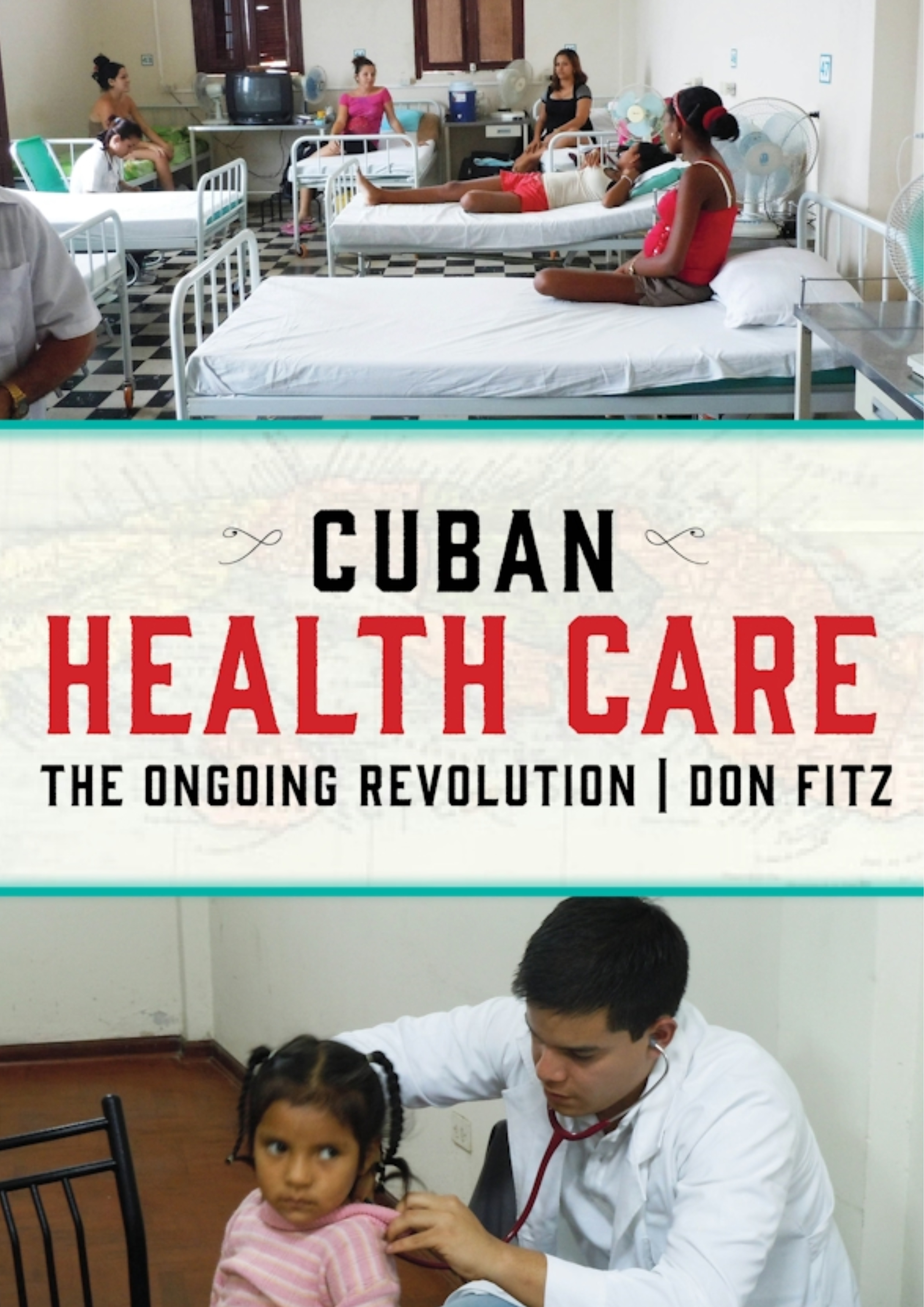
A review of Fitz's acclaimed book on Cuba’s Health Care System
The Holistic Revolution: A Review of the Cuban Healthcare Model
In Cuban Health Care: The Ongoing Revolution, Don Fitz provides a compelling analysis of a medical system predicated on the belief that human illness cannot be addressed in isolation from the societal structures that produce it. Fitz argues that the Cuban model is not merely a collection of clinics, but a fundamental "revolution of structure" designed to dismantle the historical disparities of wealth, geography, and race. This review explores how Cuba’s integration of social determinants, grassroots primary care, and de-commodified biotechnology offers a radical alternative to the global healthcare status quo. This has been achieved without the input of a capitalist system organized around profitable health care.
The book is divided into 12 accessible chapters and a postscript. Four key points can be drawn from the book: the importance of a people-centred model of preventative care, the debt that Africa owes Cuba; the possibility of developing biotechnology without it being capital-centred and Cuban’s health achievements despite the US embargo against the Cuban people.
The Architecture of Preventative Care
Fitz introduces the philosophy behind Cuba’s health success despite sanctions from the USA. He shows that at the core of the Cuban success is Medicina General Integral (MGI), a holistic approach that treats the patient as a biological, psychological, and spiritual being. This philosophy is operationalized through the consultorio—neighborhood clinics that foster intimate doctor-patient bonds—and the policlinico, which ensures 24-hour localized care. These institutions are supported by the Committees for the Defense of the Revolution (CDRs), which mobilize the citizenry for public health campaigns. This synergy proves that improving medical outcomes requires parallel advancements in literacy, housing, and community engagement.
Medical Internationalism and the African Debt
Fitz’s book shows how Cuba’s commitment to health extends far beyond its borders through "medical internationalism." The Escuela Latinoamericana de Medicina (ELAM) stands as a revolutionary project, providing free medical education to students from underserved global communities. ELAm is based on three core principles:
-
Commitment to Africa: Cuba has maintained a profound commitment to the health and wellbeing of African nations, often being the first to respond to crises that Western powers ignore.
-
A Shared History: This support serves to remind the peoples of Africa and the Caribbean of Cuba’s blood-ties and solidarity. Cuba has suffered significantly in these commitments—sacrificing domestic resources and personnel—to uphold the principle that health is a global right.
-
Regional Integration: Organizations like the Organization of African Doctors (OAD) and the Brigadas Estudiantiles por la salud (BES) highlight a model of "connected support" that seeks to bolster CARICOM and regional integration, resisting the brain drain of doctors to the West.
Biotechnology Without Profit
shows how institutions, such as the Center for Genetic Engineering and Biotechnology (CIG) have achieved world-firsts, including vaccines for Type B Meningitis and advanced lung cancer. Because these developments are not driven by "monopoly prices," Cuba can export life-saving treatments to low-income nations at cost. This "high-qualified human capital" is motivated by social justice rather than immediate profit, proving that innovation can thrive outside of a capitalist framework.
Perhaps the most striking aspect of Fitz’s account is Cuba’s advancement in biotechnology. By breaking the barriers between research, production, and marketing, institutions like the Center for Genetic Engineering and Biotechnology (CIGB) have achieved world-firsts, including vaccines for Type B Meningitis and advanced lung cancer. Because these developments are not driven by the "monopoly prices" seen in agreements like the Trans-Pacific Partnership (TPP), Cuba can export life-saving treatments to low-income nations at cost. This "high-qualified human capital" is motivated by social justice rather than immediate profit, proving that innovation can thrive outside of a capitalist framework.
The Geopolitics of Manufactured Suffering
The success of the Cuban model has been achieved despite a concerted effort by the US to see it fail. These include:
-
The Punitive Nature of Sanctions: The U.S. Embargo, which started in 1960 and has progressively intensified, is a tool of manufactured suffering. These sanctions are not merely political disagreements; they are punitive measures that affect ordinary people by obstructing medical technology, internet connectivity, and the exportation of life-saving vaccines.
-
Undermining Sovereignty: Hardliners in the US frequently attempt to undermine CARICOM and regional unity to isolate Cuba, fearing that its success provides a "dangerous example" of a non-capitalist, Afro-descendant-led success story.
Contradictions and Evolution
Fitz does not ignore internal pressures, such as the historical shadow of homophobia and machismo. He notes that a revolution is incomplete if it excludes people based on sexual orientation. The work of Mariela Castro and CENESEX in pushing for LGBTQ+ rights represents a necessary internal evolution to match the external revolutionary goals of the state.
Externally, the U.S. Embargo remains the primary obstacle. By restricting the export of technology, interfering with digital connectivity for researchers, and blocking the global spread of Cuban innovations, the blockade functions as a direct assault on global health.
Finally, Fitz’s exploration, coupled with the socio-political critique of the "hardliner" stance, reveals that the Cuban healthcare system is an embattled miracle. By treating healthcare as a human right, Cuba has demonstrated that a small nation can outpace the developed world in innovation and empathy. However, the ongoing "manufactured suffering" via sanctions serves as a reminder that the struggle for a healthy society is inextricably linked to the struggle against global structures of racism and imperialism.
Patricia Daley is a Professor of Human Geography of Africa in the School of Geography and the Environment, University of Oxford.