



Who funds the African Union? Africans can not champion their own solutions when they can’t pay for them. Financing Africa’s unification by outside sources endangers genuine development and self-respect.

Democratic participation by the rank and file of the ANC in the December national leadership conference is a charade. A genuinely open system in which members are able to choose quality candidates must be introduced.
Reading unlocks the imagination, but it also unlocks the soul of a person. It has the potential to unlock the soul of a nation like Liberia struggling so desperately to find and define itself.
Haitian President Michel Martelly has managed to inspire popular opposition to his regime almost since his election in May 2011.
Having failed to forcibly impose a radical theocracy in Somaliland, militants have now turned to funding political parties to pursue their agenda.
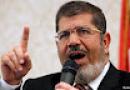
Liberalism creates nothing, in the peripheries of the Global South that agree to submit to it, other than a crony capitalism based on a Comprador State in opposition to the National State committed to sustainable economic and social development.
Where are we now?
Guinea pigs of slavery
Murderers of our own blood
while we sing of freedom!
Now complacent and helpless
Pretense of humanity
Suffocating Pluralism
Covering to suppress
How we whine!
Of foreigners’ deeds
Decorations of covered crimes?
What are we doing different?
How they turn into their graves!
The great heroes of motherland
Who fought through mountains and valleys!
Thinking it will come to pass!
* The poet Uwineza Mimi Harriet, is a M.A Candidate in Peace and Conflict Studies at Makerere University, a blogger, an author and activist. She has co-founded a think-tank called Peace Associates Network Africa and works with a human rights organization in the Horn of Africa.
The response of the Public Affairs Officer of AFRICOM shows that AFRICOM takes its media management seriously. The fact is that the retirement of General Carter Ham was announced on October 18 in the context of a review by the Pentagon of the events of September 11/12, 2012 in Benghazi, Libya.
The fact that the Department of Defense issued a press release on October 31 on the status of Carter Ham does not change the fact that the General will be replaced if and when David Rodriquez is confirmed.
The progressive scholarly community and the peace movement takes no comfort that Carter Ham is to be replaced by Army Gen. David M. Rodriguez. The historic close relationship between David M. Rodriquez and retired General Petraeus (as revealed in the biography of Petraeus, ‘All in: the Education of David Petraeus’) should elicit close scrutiny if the U.S. Congress does its work. Ultimately, whether General Carter Ham is retiring because of ‘long planned leadership succession deliberations’ or he was strongly advised to retire does not change the realities of the insecurity in Libya after the NATO intervention.
This author will accept the word of Benjamin Benson of the media management division of AFRICOM that Carter Ham was not, 'removed.' Whether removed or retiring because of 'succession deliberations' we await the full audit from General Ham of what happened in Libya and how AFRICOM contributed to the present lawlessness in Libya by this intervention.
Horace G Campbell
Professor of African American Studies and Political Science at Syracuse University
Your article ‘Libya all in? Failed Nato mission exposes US generals’ of 15 Nov. by Horace G. Campbell (www.pambazuka.org/en/category/features/85450) contains a significant factual error. Gen. Ham has not been removed, and continues to serve as Commander of U.S. Africa Command. I urge you to correct this error following basic standards of journalism.
Defense Secretary Leon E. Panetta’s announced intention to nominate Army Gen. David M. Rodriguez to succeed Army Gen. Carter F. Ham as the commander of U.S. Africa Command followed long planned leadership succession deliberations. The leadership transition at this important command has nothing to do with the attack on American personnel in Benghazi.
General Martin Dempsey, Chairman of the Joint Chiefs of Staff, noted "The speculation that General Carter Ham is departing Africa Command (AFRICOM) due to events in Benghazi, Libya on 11 September 2012 is absolutely false. General Ham's departure is part of routine succession planning that has been ongoing since July. He continues to serve in AFRICOM with my complete confidence." See
Benjamin Benson, Media Engagement, Chief
U.S. Africa Command, Public Affairs (J035)
Kelley Barracks, Stuttgart-Möhringen, Germany
The extramarital affair cited for the resignation of CIA chief Gen Petraeus is insignificant by far compared to his belonging to a section of US military and intelligence elite pursuing a complex right-wing global agenda.
Nigeria is handing over the country’s strategic power sector to private investors ostensibly to improve service delivery. This is being done despite the glaring and costly failure of privatization in other sectors. Nigerians should resist this fraud.
There are at least 37,000 domestic workers in upper and working class suburbs of the Mozambican capital earning low wages and working long hours. Recent moves to include them in labour protection schemes could change their fortunes.
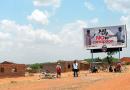
Most well-intentioned corruption busting remedies in Africa fail because the root causes of corruption on the continent are often poorly understood.
Despite living in dehumanising conditions in their own country, the organised shack dwellers of South Africa find dignity in working together to resist their oppression. They build the power of the poor from below.
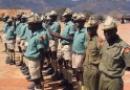
At the heart of the quota system debate is the incredibly small number of students who are admitted to Malawi’s public universities. Malawi ranks bottom in the university-age cohort of young people enrolled annually.
This Sunday, Sierra Leoneans head to the polls where President Ernest Bai Koroma faces his main rival Julius Maada Bio. But key issues affecting the people have not featured in the campaigns.
South Sudan analyst responds to critiques of his previous articles on the challenges of building the new nation.
Only a tiny percentage of African students are admitted to university because of limited capacity at the institutions. Developments in computer technology can address this problem, as the case of African Virtual University shows.
The UN special envoy to Western Sahara says the Moroccan government and the Polisario Front rebels must resolve their dispute before lingering hostilities plunge the entire North Africa into renewed conflict. The Polisario Front fought a guerrilla war against Moroccan forces until 1991, when the United Nations mediated a ceasefire between the two sides with the agreement that a referendum would be held to determine the final status of the territory. However, the plebiscite has never been held.
Zimbabwe's newspapers are filled with public notices for auctions as many other individuals and companies lose their property to banks and money-lenders after falling behind on loan repayments. The country's financial sector has enjoyed three years of economic growth following the adoption of multiple currencies in early 2009 and an end to a tumultuous trading period characterized by record inflation, bank closures and failures. Buoyed by phenomenal growth in deposits and a steady currency, many banks have introduced personal bank loans to attract new clients.