



Tanzanian NGO Sikika and Policy Forum, a network of Tanzanian NGOs, recently undertook an analysis of unnecessary expenditures to find out if government commitments to spend more efficiently were being met. Slashing unnecessary expenditure, their report states, could enable the Tanzanian government to build more than 100 dispensaries in remote areas or buy 5,000 delivery beds to reduce the number of pregnant women who deliver on the ?oors of hospitals and clinics.
While climate change has captured the headlines, many countries are running out of freshwater supplies, threatening human health and causing conflicts between nations. Water should be at the top of the global and national agendas, argues Martin Khor.
Malawian universities should become more involved in training primary school teachers, argues Steve Sharra. As it stands, a university teaching degree is a ticket out of the classroom into higher paid jobs. ‘The best teachers are always taken out of the primary school classroom and sent to secondary schools and other administrative positions,’ Sharra writes. Teachers should be motivated to stay in the classroom via ongoing skills development programmes.
Alemayehu G. Mariam speculates on the possible benefits and drawbacks of remittances to Ethiopia from the Diaspora. Using examples from Latin America and Asia, the author suggests the cash influx to Ethiopia (estimated at over a billion US dollars per year) can either be harnessed for investment, or, more negatively, trigger ‘Dutch Disease’.
With land rights under Kenya’s new constitution poorly understood by many in the country, civic education and greater pressure on parliament to draw on land expertise are needed, writes Beatrice Fantoni.
The diaspora has a key role to play in using the resources at their disposal to build the power of Nigeria and the rest of Africa, argues Okello Oculi.
With some 5,000 families in Angola’s Lubango, Matala and Quipungo municipalities affected by housing demolitions since August, struggles continue to get the government to respect both legislation and its own public statements, writes Sylvia Croese.
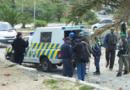
The Mandela Park Back-yarders, a social movement in Cape Town, describes the aftermath of the situation in Hout Bay in Cape Town, where the City of Cape Town attempted to demolish shacks they claimed where illegally built.
Violence in Cape Town’s Hout Bay over housing has raised a broader debate about housing policy and how a segregated city can transform itself. Ardiel Soeker and Kailash Bhana argue for an alternative way of managing urban housing needs – one that will ensure access for low-income families.

Following the 1 October bombs in Abuja, suggestions have been made that northern interests in Nigeria were attempting to convey a message to President Goodluck Jonathan in response to his 2011 presidential ambitions, writes Cameron Duodu. While political declarations around responsibility for the bombing confuse the public, People’s Democratic Party (PDP) ‘elders’ are in discussions over whom to endorse as the 2011 party candidate.
The promise of legal aid is an empty one for most people in Africa, thanks to a shortage of lawyers, many of whom are located in capital cities rather than in rural areas. But a new approach that uses paralegals to provide frontline services could make legal aid a real option for people across the continent, writes Adam Stapleton, with plans underway for the establishment of ‘an international alliance of organisations to promote primary justice services to the poor.’
When children work in order to ensure the livelihoods of themselves and their families, should this be defined as child labour, asks Salma Maoulidi.

The banning of SMS messaging in Mozambique is but one of several signs that both SMS (short message service) and the internet are changing the way media creates a national conversation in African countries, writes Russell Southwood.

The excessive and arbitrary use of pretrial detention critically undermines socioeconomic development and is especially harmful to the poor, argues Kersty McCourt. Pretrial detention disproportionately affects individuals and families living in poverty: they are more likely to come into conflict with the criminal justice system, more likely to be detained awaiting trial and less able to make bail or pay bribes for their release, McCourt stresses. For individuals, the excessive use of pretrial detention means lost income and reduced employment opportunities; for their families, it means economic hardship and reduced educational outcomes; and for the state, it means increased costs, reduced revenue and fewer resources for social service programmes.

While they may appeal at a rhetorical level, South African ideas around pan-Africanism and greater regional integration tend to be ambivalent and even antagonistic, writes Ella Philda Scheepers.

The decisions of the last Forum on China-Africa Cooperation (FOCAC) meeting confirmed that China can take on board the need to respond to critical reactions to its African engagement. But, asks Stephen Marks, how far are Western researchers and policy advisers taking on board the lessons that may be learned from China’s rise and its impact on low-income countries?
Tanzania's general elections are slated for October. One presidential candidate has changed the political landscape in more ways than one, writes Chambi Chachage.

New food security policies in Mozambique wrongly focus on increasing food production through large-scale farming, instead of supporting small-scale agriculture, writes Rebecca Burns. Food insecurity in Mozambique will actually increase as processed foods become more expensive and ordinary people can no longer afford to eat.

A political scrap between a young challenger and a veteran politician points towards a possible candidate for future Tanzanian president, writes Chambi Chachage.

In Frantz Fanon’s analysis of colonial relations in Algeria, Okello Oculi looks at Nigeria’s political trajectory from independence until today. Fanon argued that violence was a means to regain self-respect. Oculi critically examines this claim in the context of Nigerian events such as the war in Biafra and violence in the Niger Delta.