


From the Streets to the Seats: Trade Unionists in the New Trinidad and Tobago Government and What Should We Expect?
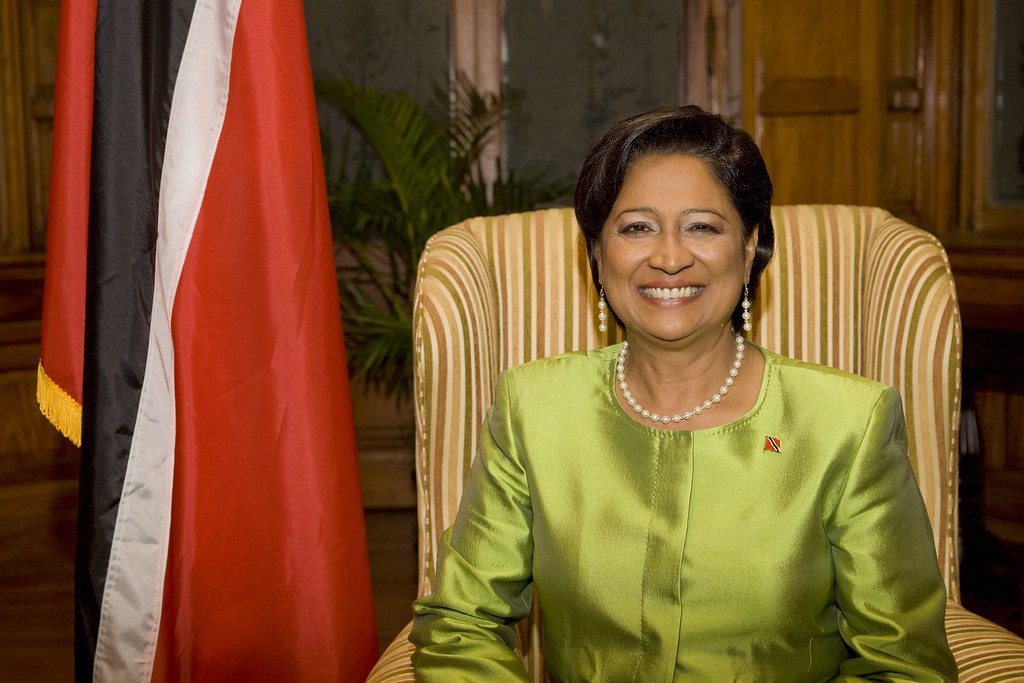
Trade union leaders helped secure a UNC victory in Trinidad and Tobago’s 2025 election—now voters must ask whether these former working-class champions will truly represent workers from within the government.
In what is being called one of Trinidad and Tobago’s most unpredictable elections in decades, the electorate has made a dramatic political shift.[1] Former Prime Minister Kamla Persad-Bissessar and her United National Congress (UNC) have returned to power, winning 26 of the 41 parliamentary seats, compared to 13 for the People’s National Movement (PNM) and 2 for the Tobago People’s Party. Even more telling, the UNC appears to have won the popular vote as well. It seems that many PNM supporters simply stayed home. Voter turnout was a historic low—just 54%, even less than the elections that were held during the COVID-19 pandemic. It’s clear the electorate was hungry for change. Yet the story of this election is not just about who won, but how they won—and who helped them get there. Trade unionists were instrumental in helping the UNC secure state power. However, given the agenda they have backed, their mode of integration into the UNC, and a long history of union leaders failing to uphold the interests of workers, there is good reason to be cautious about whether they will genuinely deliver on their promises to working people.
A major factor in this political shift in this election was the prominent role played by the country’s trade union leaders. The trade union movement has been a consistent critic of the PNM over the last ten years. They have consistently called attention to the rising cost of living, with food prices alone increasing by nearly 46% between 2015 and 2022.[2] Trade unions consistently pressured the PNM government to address the persistent issues of job insecurity, unemployment, rising violent crime, deteriorating public services, and tone-deaf leadership—like salary increases for ministers after calling upon citizens to engage in national “belt tightening.”[3] For this election, several union leaders aligned themselves with the UNC, winning seats in key strongholds once considered PNM territory. Ernesto Kesar of the Oilfields Workers’ Trade Union flipped Point Fortin, and Clyde Elder, former head of the Communications Workers’ Union, won La Brea.[4] These victories raise an important question: What should the working people expect now that their champions are moving from the streets to the seats?
As I show in my new book, Fueling Development (Duke University Press, 2025), the relationship between trade unions and political parties in Trinidad and Tobago has always been complicated.[5] Historically, Trinidad and Tobago had a powerful labor movement characterized by three key features: united by race, gender, and sector, committed to Pan-African unity, and pushed for economic, political and social transformation. However, in the post-World War II period, with the introduction of party politics, union leaders have found it difficult to form viable labor parties. Many still remember the dismal performance of labor parties such as the Workers and Farmers Party in the 1966 general elections, and the short-lived stint of the United Labour Front, which won enough seats to become the official opposition in Parliament in the 1976 elections, but quickly fell apart due to internal divisions between ULF leaders. According to historian Godfrey Vincent, the Trinbagonian working class paradoxically wanted a strong and independent labor movement to defend their economic interests, but could not break out of the racialized party politics where the dominant parties purported to advance their racial claims.
As a result, many labor leaders have entered mainstream parties—PNM or UNC—where they often find themselves marginalized or used for political gain. By institutional design, the dominant parties incorporate trade unionists, but always in a subordinated position to the petty bourgeois party leadership. As early as the 1950s, Dr. Eric Williams, founder of the PNM, made it clear that while trade unions were welcome to support the party, their influence would be tightly controlled. The UNC today seems to follow a similar approach—welcoming individual trade unionists, but not as a unified, independent bloc that can challenge party policies. This way, trade unionists can bring their resources, experience, and potential voters to propel petty bourgeois parties to state power, but at any sign of significant opposition to the party leadership and/or decisions, they can be easily dismissed.
Furthermore, by forming an alliance with the UNC, this segment of the trade union movement has endorsed a range of policies that are unequivocally antithetical to its core principles. The movement has historically prized African-Indian interracial worker unity alongside the unification of global Africans to challenge racism and exploitation, and advance Black self-determination. However, Kamla Persad Bissessar and the UNC – popularly considered to be the party representing the Indian population –Persad Bissessar’s lack of consistency in her support for Pan-African struggles is also noteworthy. On the one hand, she has made public statements supporting the CARICOM movement for reparations for enslavement and genocide (ten years ago), and on the other publicly denigrated African people everywhere through consistent anti-Black racial discourse in election campaigns (the PNM also engages in racially divisive rhetoric), including the 2025 one.[6] For example, in a spat with an African political opponent, Persad Bissessar retorted that she (Persad Bissessar) has the name of her ancestors while the Black candidate has the name “of a slave-master.”[7] Furthermore, the affinities between Persad Bissessar and the Trump administration are not just at the level of talk.[8] It is also at the level of policies. Like the Trump administration, Persad Bissessar has consistently engaged in the criminalization of Venezuelan migrants in Trinidad and Tobago and even called for their mass deportation.[9] This is diametrically opposed to the trade union movement’s historic solidarity with other oppressed groups.
Furthermore, having not being able to address crime when the UNC was last in office, the party is now pushing policies such as the mass distribution of firearms to the citizenry and Stand Your Ground laws.[10] Independent and reputable research has shown that these policies tend to increase homicides and disproportionately impact Black communities.[11] In forming this coalition with the UNC, trade unionists are endorsing policies that stand to harm the very people they claim to represent.
Even if the UNC’s Workers’ Agenda, which was developed in dialogue with a number of prominent trade unions promises to reopen Petrotrin (the main petroleum refinery), boost investments in agriculture, and “modernize” repressive labor laws, when labor leaders enter government, do they remain accountable to the workers they once represented? Or do they, as history suggests, become distanced from those very people? Take Arthur A. Cipriani, once a revered leader of the Trinbagonian labor movement in the 1920s. After being elected to the Legislative Council in 1925, he gradually shifted from radical labor advocate to cautious politician, urging workers not to strike. His disconnect from working-class demands eventually led to his political isolation. For Cipriani’s increasing conservatism, workers at a rally in the 1930s sang the chorus: “We will hang Cipriani on the sour apple tree /When the red revolution comes.”[12]
Adrian Cola Rienzi, another key labor figure in the 1920s and 1930s, followed a similar path. Once labeled a “communist agitator” for fiercely and steadfastly advancing the interests of working people, Rienzi was later praised by colonial officials for being cooperative and “conciliatory” and rewarded with a position in the Executive Council. E.R. Blades, a fellow trade unionist, once remarked that Rienzi “did much valuable work” but “the higher he goes, the less the workers see of him…. since he has reached the top of the ladder, he is a changed man, and neglects his trade union work.”[13]
Even Albert Gomes, a former trade unionist turned government official in the 1940s and 1950s, reflected on his own depoliticization once in government. He lamented that joining the Executive Council quickly destroyed a trade unionist’s popularity, likely by design. Once in power, the government subtly but effectively forced former populist figures to conform, stripping them of their public appeal and muting their voices that once roared in opposition. This process was harsh and perhaps even deceptive—making the former trade unionist believe their sacrifice served a noble purpose. In reality, these trade unionists began to compromise and defend interests other than those of the everyday toilers. Gomes himself was one of the chief architects of a development plan so anti-worker and so pro-imperial and pro-business that one would question whether he was ever a trade unionist at all. Well into the post-independence era, trade unionists like Basdeo Panday rode the backs of working people into state power only to turn around and betray them, enriching the local oligarchy while becoming the center of multiple corruption scandals of self-aggrandizement.[14] This dynamic is part of a recurring problem not only with respect to labor representatives in government in Trinidad and Tobago, but all across the world.
This is not to say labor leaders should avoid public office. On the contrary, as Tubal Uriah ‘Buzz’ Butler (perhaps the most influential labor leader in 20th century Trinidad and Tobago) believed, their presence is vital in any government that claims to represent the people. But many union leaders have warned of entry into the state, arguing that an independent trade union movement is a crucial counterforce to state power, to the silencing of those in opposition, and to elite enrichment. Today, the trade union movement is deeply divided over the entanglement of some unions with the now ruling party over these very concerns.[15]
As this new government takes shape, it is worth remembering that political power is not a reward for past service. It is a responsibility to future generations. History shows that trade unionists at the forefront of social justice and transformation in Trinidad and Tobago end up disappointing working people. The trade unions in the UNC coalition have already signed on to a platform that advanced racial divisiveness and harmful gun laws. Now that Kesar and Elder have won seats in government, will they challenge their party leadership on key issues like wage stagnation, layoffs, and wealth inequality? Will they speak out against corruption, even if it means clashing with fellow ministers? Or will they, like so many before them, become absorbed into the machinery of party politics, emerging only during election cycles? The masses are watching.
Zophia Edwards is an Assistant Professor of Sociology at Johns Hopkins University. She is the author of Fueling Development: How Black Radical Trade Unionism Transformed Trinidad and Tobago (Duke University Press). Her work has also been published in Political Power and Social Theory, Sociological Review, and others. She is also a member of the Global Pan-African Movement North America.
Endnotes
[2] https://www.guardian.co.tt/news/cost-ofliving-rising-but-not-salaries-6.2.1480859.43d6e97ee2; https://trinidadexpress.com/business/local/45-9-increase-in-food-from-2…
[3] https://www.loopnews.com/content/trade-unions-plan-nation-in-crisis-gathering-outside-whitehall/;https://www.guardian.co.tt/news/unions-picket-pms-residence-over-selfserving-salary-hike-calls-for-election-6.2.2173754.bfad34a9c8; https://www.tv6tnt.com/news/local/pm-dr-keith-rowley-address-to-the-nation/article_99ffe839-c0f6-5010-a976-33f9a01084e1.html
[5] Edwards, Fueling Development: How Black Radical Trade Unionism Transformed Trinidad and Tobago. https://dukeupress.edu/fueling-development
[7] https://www.guardian.co.tt/article-6.2.356562.453e2d1924; https://www.guardian.co.tt/news/kamlas-slavemaster-comment-sparks-outra…
[8] https://newsday.co.tt/2025/04/30/us-secretary-of-state-hails-new-pm-kamla-a-strong-leader/;https://newsday.co.tt/2025/01/20/kamla-hails-trump-bashes-woke-biden-administration/.
[11] https://pmc.ncbi.nlm.nih.gov/articles/PMC8861849/; https://publichealth.jhu.edu/center-for-gun-violence-solutions/research-reports/gun-violence-in-the-united-states; https://firearmslaw.duke.edu/2022/01/the-dangerous-expansion-of-stand-y…
[12] Quoted in Rhoda Reddock, Elma François, 22.
[13] E.R. Blades quoted in O. Nigel Bolland, Politics of Labour, 417.