


Echoes of Liberation: Frantz Fanon and the Continuing Anti-Imperialist Struggle in the Global South
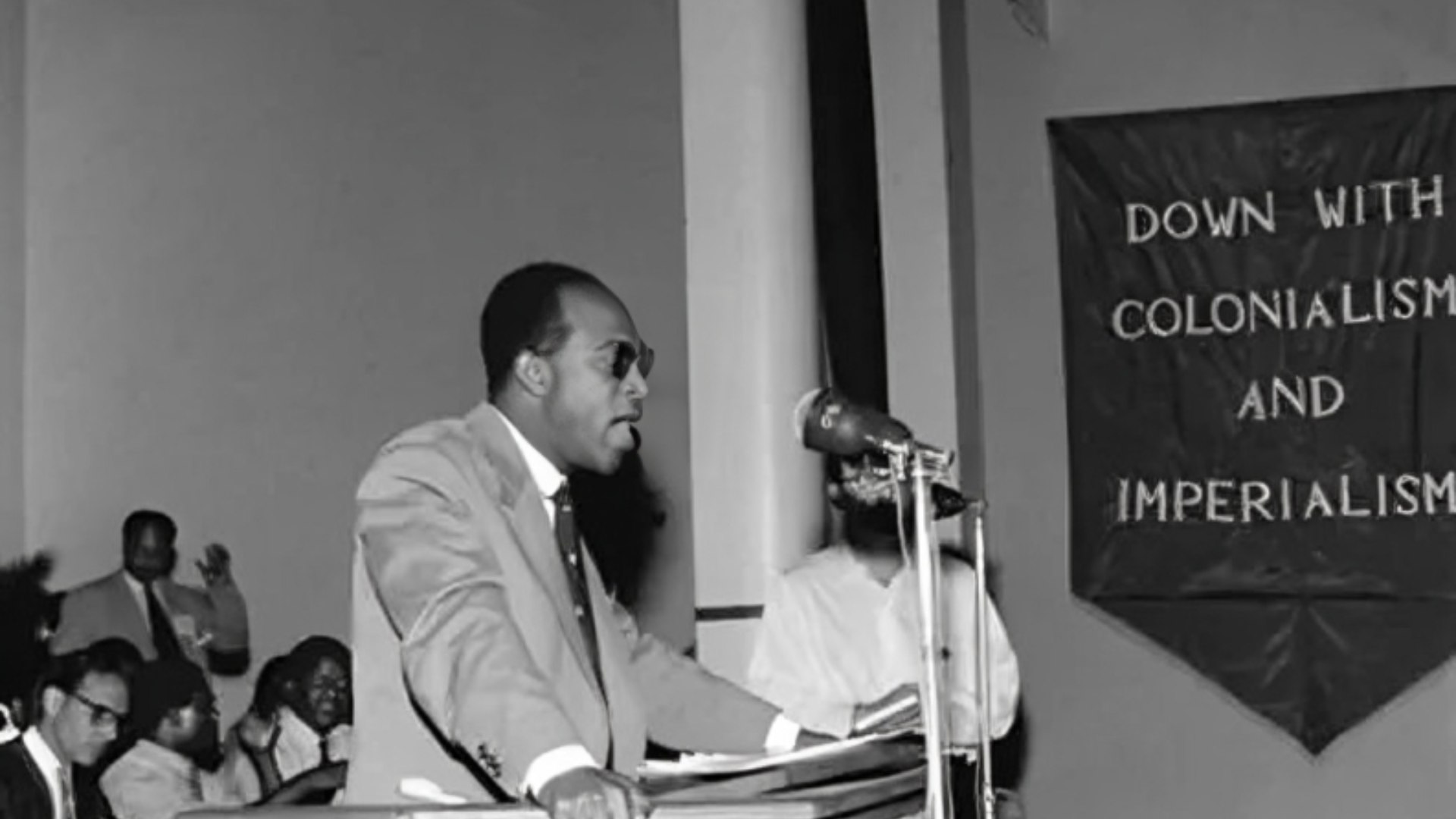
Fanon’s revolutionary thought illuminates ongoing anti-imperialist struggles across the Global South, inspiring liberation movements, exposing neocolonial exploitation, and demanding solidarity, collective resistance, and the creation of a new humanism.
Introduction: Fanon’s Timeless Call
Across the Global South, the wounds of colonialism fester, nourished by racial capitalism, extractive economies, and ecological devastation that threatens the very survival of communities. From the townships of South Africa to the deserts of Sudan, from the mountains of Chiapas to the occupied lands of Palestine, oppression manifests in diverse and insidious forms—yet so too does resistance. In these struggles, the thought and praxis of Frantz Fanon resonate with undiminished urgency.
Fanon, psychiatrist, revolutionary, and thinker, understood that liberation is not merely political—it must be psychological, cultural, and economic. Independence without decolonization of the mind, the reclamation of land, and the reconstruction of society is incomplete, a hollow banner fluttering over invisible chains dressed as freedom. Fanon’s writings, particularly Black Skin, White Masks and The Wretched of the Earth, challenge the colonized to confront both external and internalized oppression, and to reclaim the full measure of humanity.
In our contemporary era, his lessons remain urgent. The Global South continues to bear the scars of imperialist domination: genocidal settler colonialism in Palestine, the structural extraction of the DRC’s minerals, land grabs across southern Africa, and the relentless debt-imposed austerity programs across the Caribbean. Fanon’s call is clear: the oppressed must not merely inherit freedom—they must actively seize it. This article explores the enduring influence of Fanon across anti-imperialist struggles, tracing his impact on liberation movements, revolutionary praxis, and contemporary resistance across the Global South.
The Global South as a Fanonian Battlefield
The Global South is more than a geographic construct; it is a battlefield of ideas, memory, and resistance. Its lands have been plundered, its peoples dehumanized, yet its spirit refuses subjugation. Fanon’s influence transcended Algeria, reaching Cuba, Nicaragua, Chiapas, South Africa, Mozambique, and the Caribbean. In each context, his insistence on the decolonization of the mind guided revolutionary movements.
Cuba’s revolutionaries, led by Fidel Castro and Che Guevara, turned Fanon’s theories into action, demonstrating that liberation is both a moral and political imperative. Guevara, inspired by Fanon, emphasized that revolutionary consciousness precedes structural transformation and that the oppressed must reclaim agency to disrupt entrenched hierarchies.
In South Africa, the Black Consciousness Movement, led by Steve Biko, exemplified Fanon’s principles in action. Biko’s insistence that “the most potent weapon in the hands of the oppressor is the mind of the oppressed” reflects Fanon’s call to psychological emancipation as the foundation of political liberation. This movement inspired the Soweto uprisings of 1976, student-led protests that challenged apartheid education and symbolized the broader struggle for human dignity.
Burkina Faso’s Thomas Sankara embodies Fanon’s vision of practical revolutionary governance. Sankara’s policies—land reform, nationalization of resources, educational expansion, and women’s empowerment—demonstrated that liberation is a holistic process encompassing culture, economy, and governance. His assassination in 1987 underscores the threat that revolutionary leaders face from both internal elites and external imperialist forces.
Across the Caribbean, Haiti’s revolutionary legacy—particularly the Haitian Revolution of 1791–1804—intersects with Fanon’s humanist vision. The revolution’s radical assertion of Black humanity against colonial slavery and plantation systems mirrors Fanon’s insistence that liberation is inseparable from dignity and self-assertion. Modern movements across the Caribbean continue to draw inspiration from these historic struggles, challenging neocolonial economic structures and advocating for social justice.
The battlefield of the Global South is not only physical but epistemic. Colonized minds, manipulated over centuries, must be decolonized for genuine freedom to emerge. Fanon teaches that every uprising, every occupation of space, and every act of civil defiance is an assertion of humanity—a refusal to be silenced. This ongoing struggle is the living testament to Fanon’s vision: liberation is unfinished, yet inevitable.
Fanon and the Neocolonial Trap
Fanon warned that political independence without structural transformation produces neo-colonies within sovereign borders. Post-independence elites often replicate the oppressor, reproducing hierarchies, exploitation, and dispossession. In South Africa, post-apartheid neoliberal policies, persistent land inequality, and elite capture mirror these warnings. Millions remain marginalized despite formal democratic structures, demonstrating that political liberation without social, economic, and cultural reform is hollow.
In the Democratic Republic of Congo, mineral wealth continues to flow north while communities face extreme poverty, environmental devastation, and displacement. Foreign powers and multinational corporations perpetuate patterns of extraction reminiscent of colonial exploitation, echoing Fanon’s critique of the postcolonial elite’s complicity.
Latin America offers additional examples: Bolivia, Venezuela, and Nicaragua illustrate the tension between popular liberation movements and global capital. Evo Morales’ policies on resource sovereignty, Hugo Chávez’s Bolivarian revolution, and Nicaragua’s Sandinista experiments demonstrate attempts to reclaim agency and resist imperialist pressures.
Yet each faces persistent challenges from international sanctions, covert destabilization, and global economic pressures, revealing the ongoing relevance of Fanon’s warnings.
Neocolonialism operates not only through military and economic coercion but also through ideology, education, and media narratives that normalize global inequities. Fanon exposes this “coloniality of power,” which structures contemporary hierarchies. Liberation demands confronting both external imperialist forces and internal collaborators who perpetuate these chains. It is a struggle of awareness as much as action, demanding a radical reconstruction of consciousness and society.
Revolutionary Violence and the Ethics of Liberation
Fanon’s advocacy of revolutionary violence is often misunderstood. For him, violence is not gratuitous but restorative—a moral act that reclaims dignity from oppressors who have dehumanized entire peoples. In Algeria, the anti-colonial war against France demonstrated the necessity of violence to restore agency. The colonized, stripped of autonomy, were empowered by asserting themselves, reclaiming both territory and humanity.
In South Africa, the Marikana massacre of 2012 illustrates that systemic violence persists. Strikes, protests, and organized resistance echo Fanon’s insistence that the oppressed must assert agency to demand justice. Likewise, Palestine endures settler-colonial violence; the occupied population’s struggle embodies Fanon’s principle that liberation requires both moral courage and collective action.
Contemporary movements in Brazil, Chile, Lebanon, and Sudan demonstrate that violence against structures of oppression can be ethical when it dismantles exploitation and restores dignity. Fanon distinguishes between revolutionary violence, aimed at liberation, and gratuitous violence, which merely perpetuates cycles of oppression. Liberation, therefore, is not a gift but a moral obligation, enacted through both strategic and ethical means.
Decolonial Humanism and Global Solidarity
Fanon envisioned a world beyond race, borders, and exploitation—a world grounded in solidarity and collective humanism. Today, movements for climate justice in Kenya, anti-extractive campaigns in Bolivia, and grassroots uprisings in Sudan exemplify this vision. Liberation is inseparable from empathy, cooperation, and the affirmation of the humanity of the oppressed.
Solidarity must extend across borders. Fanon teaches that no struggle exists in isolation: the fight against apartheid, colonial exploitation, or settler occupation is part of a single, interconnected struggle. Pan-Africanist and Global South movements must engage in knowledge-sharing, resource exchange, and joint advocacy to combat imperialist systems effectively. The creation of transnational networks, from student movements to labour unions, is the modern embodiment of Fanon’s vision of revolutionary solidarity.
Fanon and the Gendered Dimensions of Liberation
Fanon’s work also provides a lens for understanding the gendered dimensions of anti-imperialist struggle. Colonialism and neocolonial systems disproportionately exploit women through labour, sexualized violence, and social marginalization. Across South Africa, women played central roles in the struggle against apartheid, including the 1956 Women’s March to Pretoria against pass laws. In Algeria, women fought on the frontlines during the revolution, embodying Fanon’s notion that liberation must encompass all oppressed groups.
In Latin America, indigenous women in Chiapas and Bolivia have organized to defend both land and culture, emphasizing intersectional liberation. The feminist dimensions of anti-colonial struggle demonstrate that liberation is holistic; Fanon’s radical humanism requires that emancipation include women, minorities, and other historically marginalized groups.
Contemporary Case Studies: Africa and the Global South
South Africa: The Soweto uprisings of 1976 and ongoing student-led protests over university fees illustrate the persistence of structural oppression and the enduring relevance of psychological emancipation.
Democratic Republic of Congo: Resource extraction, environmental degradation, and economic exclusion illustrate the neocolonial patterns Fanon warned against. Local communities resist through grassroots activism and transnational advocacy.
Sudan: Grassroots uprisings, including the 2019 revolution that ousted Omar al-Bashir, demonstrate the power of organized collective action and reclaiming political agency.
Latin America: The Zapatista resistance in Chiapas and the Bolivarian movement in Venezuela illustrate anti-imperialist struggle, autonomy, and radical social change, reflecting Fanon’s principles.
Palestine: Occupation represents settler-colonial continuity. Palestinian resistance, despite ongoing violence, displacement, and dispossession, exemplifies Fanon’s insight that liberation is persistent and multi-generational.
Kenya: Land and environmental justice movements, especially among pastoralist communities resisting extractive projects, exemplify Fanon’s insistence on reclaiming both natural and cultural resources.
Education and the Decolonization of Knowledge
Fanon emphasized that liberation requires the decolonization of education and knowledge systems. Curricula in postcolonial states often reproduce Eurocentric narratives, suppressing local history, languages, and epistemologies. Movements to teach African history, indigenous sciences, and revolutionary thought reflect Fanon’s insistence that knowledge is power and that liberation begins with awareness.
In South Africa, initiatives to integrate African epistemologies into higher education and school curricula are aligned with Fanon’s vision. Similarly, in Latin America, programs teaching indigenous history and languages challenge colonial epistemic dominance.
True liberation, therefore, is as much about controlling knowledge as it is about controlling land, resources, and political structures.
Conclusion: The Unfinished Project
The legacy of Frantz Fanon endures because liberation is never complete. Political independence, legal reforms, or superficial development cannot suffice if the colonized mind remains unfreed, culture unredeemed, and economy exploitative. Fanon teaches that freedom requires psychological, cultural, and material transformation.
To the oppressed of the Global South, Fanon’s words remain a clarion call: rise, resist, and rebuild. Confront external imperialist powers and internal neocolonial structures. Reclaim dignity, assert humanity, and commit to collective emancipation. The revolution is not a relic of the past—it is the ongoing struggle for justice, solidarity, and a new humanism. Fanon speaks to us still, and it is our moral and revolutionary duty to answer.
Masilo Sepaela, Ed. S. is an academic researcher and educator dedicated to Pan-African scholarship and social justice. His work explores liberation theory, anti-imperialist movements, and decolonial praxis across Africa and the Global South. Through research, teaching, and public engagement, he examines historical and contemporary struggles for freedom, equity, and collective emancipation, amplifying the voices of the oppressed. His scholarship focuses on how theory guides activism, challenges global hierarchies, and contributes to building societies grounded in justice, solidarity, and dignity. Social media handles: (X: @MrMmetlwa, TikTok: @ntshilu_sepaela, and LinkedIn: Masilo Sepaela)
References
- Fanon, F. The Wretched of the Earth. Grove Press, 1963.
- Fanon, F. Black Skin, White Masks. Grove Press, 1967.
- Cabral, Amílcar. Return to the Source: Selected Speeches. Monthly Review Press, 1973.
- Biko, Steve. I Write What I Like. Heinemann, 1978.
- Mbembe, Achille. On the Postcolony. University of California Press, 2001.
- Quijano, Aníbal. “Coloniality of Power, Eurocentrism, and Social Classification.” Journal of World-Systems Research, 2007.
- Guevara, Che. Guerrilla Warfare. Ocean Press, 2006.
- Ndlovu-Gatsheni, Sabelo. Coloniality of Power in Postcolonial Africa. Routledge, 2013.