


Although many conferences, articles and TV broadcasts have tackled the topic of land grabbing, the voice of farmers has been marginalised. This is why La Via Campesina and the national farmers organisation of Mali is inviting people to a conference in November to listen, exchange experiences and support those who experience land grabbing every day.
'For too long the people of the Amajuba District have been raising their concerns with the office of Land Reform and Rural Development at many levels and at many times, but in vain. It is in our view that such an audience with both senior officials and politicians will ensure accountability which has been lacking thus far within the department.'
A new collection of stories, research and good practice is showing how African climate and poverty activists are leading the global fight for climate justice - finding creative, inspired ways of using life-saving knowledge networks to share climate change and poverty research. But their voices are often ignored by African governments when it comes to policy, and funding for African-led research and knowledge sharing is not seen as a priority. 'New voices, different perspectives' is a pioneering pan-African ‘encyclopaedia’ of the brightest and best ideas in climate change adaptation. It’s the result of a collaboration between over 200 of the continent’s leading development researchers, community activists, NGOs, climate scientists and international donors at the AfricaAdapt Climate Change Symposium held in Addis Ababa, Ethiopia. 'New voices, different perspectives' offers a stark message to African politicians in the run up to the UN climate negotiations to be held in Durban, South Africa, this December: African governments can only lead the global fight for climate justice if they start to seriously value indigenous knowledge, community-led responses and African-led research. Apart from the publication, a video animation can be watched at:
Groups from 13 developing countries have slammed UK climate loans to be given through the World Bank. Community leaders in countries including Nepal, Bangladesh, Mozambique and Yemen have written to British cabinet ministers Chris Huhne and Andrew Mitchell rejecting the loans the UK is providing to their countries to help them cope with climate change. In their letter they say the UK and other rich industrialised countries, who have done the most to cause climate change, owe a ‘climate debt’ to poor countries who are worst affected by the phenomenon. ‘Climate loans will only lock our countries into further debt, and further impoverish our people,’ reads the letter.
Organisations are invited to sign an open letter calling on the United Nations and Member States to advance the human right to water and sanitation, including by taking a stand against the abuses of transnational corporations and safeguarding themselves from corporate influence.
Cameroon has opened its first landfill gas recovery plant, which aims to reduce methane emissions from waste and earn the country emissions reduction credits under the Kyoto Protocol’s Clean Development Mechanism. The plant will trap methane generated by decaying household waste at the Nkolfoulou waste disposal site, on the outskirts of the capital, Yaounde. The gas will be stored in wells and burned off, releasing carbon dioxide, a gas that contributes substantially less to climate change per volume released than methane.
As parts of the Horn of Africa experience their driest periods in 60 years, pushing the numbers needing aid to beyond 10 million, some have been quick to blame climate change. But no single event can be attributed to climate change, which involves long-term (decades or longer) trends in climate variability. There is, however, consensus in attributing the drought to the particularly strong La Niña event. The impact of climate change on the intensity and frequency of La Niña and El Niño in future is a big unknown. Philip Thornton, a senior scientist who works part-time with the Nairobi-based International Livestock Research Institute (ILRI) and the University of Edinburgh-based Institute of Atmospheric and Environmental Sciences, told IRIN via email that projections of the climate-change impact in East Africa were 'a problem' as the authoritative Inter-governmental Panel on Climate Change’s Fourth Assessment Report 'indicated that there was good consensus among the climate models that rainfall was likely to increase during the current century'.
Only two in every five people in the Southern African Development Community has access to safe water for drinking and household use. Three quarters of those lacking access, live in rural areas and the majority of these are women and children. Chrispin Sedeke, head of the Transboundary Water Management Division of the Ministry for the Environment of the Democratic Republic of Congo, believes that even these discouraging figures are likely understated. According to a report published in March 2011 by the United Nations Environment Programme, the DRC possesses half of the water resources in Africa, but more than 50 million Congolese do not have access to water.
Europe's biodiesel industry could be wiped out by EU plans to tackle the unwanted side effects of biofuel production, after studies showed few climate benefits, four papers obtained by Reuters show. Europe's world-leading $13 billion biodiesel industry, which has boomed in the wake of a decision by Brussels policymakers in 2003 to promote it, is now on the verge of being legislated out of existence after the studies revealed biodiesel's indirect impact cancels out most of its benefits.
Shell South Africa has been ordered to withdraw 'unsubstantiated' and 'misleading' claims it made in full-page advertisements in newspapers about its use of hydraulic fracturing (fracking) for shale gas exploration in the Karoo. The ruling by the Advertising Standards Authority (ASA) was welcomed by Jonathan Deal, chairman of the Treasure the Karoo Action Group (TKAG), who laid the complaint. 'It is critical that with an issue so important to South Africa as fracking that the public is not misled, as Shell clearly intended in its advertising.'
Plans are in place to clear the diverse rainforest ecosystem in Southwest Cameroon to make room for oil palm plantations. The forest and the agricultural societies situated around it are the foundation for the livelihoods and food supply of the people in the region, which comprises 38 villages and around 45,000 inhabitants. The organisation Rainforest Rescue is asking people to participate in their protest by writing to the minister of environment of Cameroon.
To breathe new life into its agricultural sector and boost output, Sudan is desperately seeking foreign investment, especially from neighbouring Arab countries such as Egypt and Saudi Arabia which are nervous about their future food security. In recent months, farmers have staged sporadic demonstrations against what they consider an unacceptable offer by the government to buy their land. Some have degenerated into violent confrontations with the police. 'The farmers are complaining, because the price they are being offered for their land is not fair,' said lawyer and political activist Majdi Selim, speaking at his office in Wad Madani.
The River Congo waters have drastically decreased in the first six months of the year, causing problems for boat navigation. According to the DRC public company in charge of the waterways - Régie des Voies Fluviales - the phenomenon is unprecedented in DRC history. According to Congolese meteorologist Amos Paluku, the low water level is linked to other climatic changes observed in the country, particularly in the western DRC.
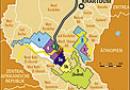
The Oakland Institute takes a closer look at South Sudan’s largest land deal to date – the granting of a 49-year lease of 600,000 hectares of land to US-based firm Nile Trading and Development Inc (NTD) by the shadowy Mukaya Payam Cooperative in March 2008. For a sum equivalent to around US$25,000, NTD has full rights to exploit all natural resources in the leased land during this period.
Two deaths recently marked the South African political landscape - one of a well-known former government minister, the other of a community organiser. When it came to water, the two were on opposite sides of the political battle lines: Kader Asmal implemented a commericalised water policy while Thulisile Christina Manqele fought against that policy. Both leave a legacy, writes Patrick Bond.
The suggestion that the entire populations of low-lying island States could be forced to move to other States due to the effects of rising sea levels is perhaps one of the most striking and well-known examples of the potential human impacts of climate change, states this paper from the UNHCR, which assesses the relevance of the principle that statelessness should be prevented in addressing the situation of low-lying island States. 'The paper begins by examining the elements of statehood under public international law. While there is a strong presumption of continuity for established states, the possibility of a total loss of territory for natural reasons, or the total displacement of a population and/or government, is entirely novel.'
Zambia would have been in less debt if it had better policies on minerals, says the Zambia Climate Change Network. ZCCN chairperson Robert Chimambo said this was the right time to create good policies that would ensure enough revenue from the country’s minerals when copper prices were high on the international market. He, however, regretted that foreign investors were controlling the government at the expense of the Zambian people. Chimambo said it was unfortunate that the government had decided to ignore the numerous calls from various stakeholders on the need to introduce better taxing systems on the mining companies.
The thesis of this new book is that the violence wrought by climate change, toxic drift, deforestation, oil spills, and the environmental aftermath of war takes place gradually and often invisibly. Using the innovative concept of 'slow violence' to describe these threats, Rob Nixon focuses on the inattention we have paid to the attritional lethality of many environmental crises, in contrast with the sensational, spectacle-driven messaging that impels public activism today. 'Slow violence, because it is so readily ignored by a hard-charging capitalism, exacerbates the vulnerability of ecosystems and of people who are poor, disempowered, and often involuntarily displaced, while fueling social conflicts that arise from desperation as life-sustaining conditions erode.'
According to a recent study by the Southern African Power Pool (SAPP), the SADC region will continue to require more energy in the future for its developmental needs, reports Kizito Sikuka for Southern African News Features. Member State utilities through SAPP have identified a number of priority projects for commissioning over the next few years to address the energy situation in the region. Most of these projects are targeted at renewable energy sources such as solar, hydro and wind – which are less polluting to the environment compared to other forms such as coal. These projects include the Mphanda Nkuwa hydropower project in Mozambique, Itezhi Tezhi hydropower in Zambia and the Kudu gas project in Namibia.
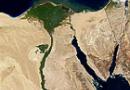
The central challenge facing Nile Basin States once the Comprehensive Framework Agreement is ratified will be establishing a new regime that works for the benefit of all 11 nations affected, rather than favouring Sudan and Egypt, writes Aaron Tesfaye.