


The Commitment of the Public Intellectual in Crisis
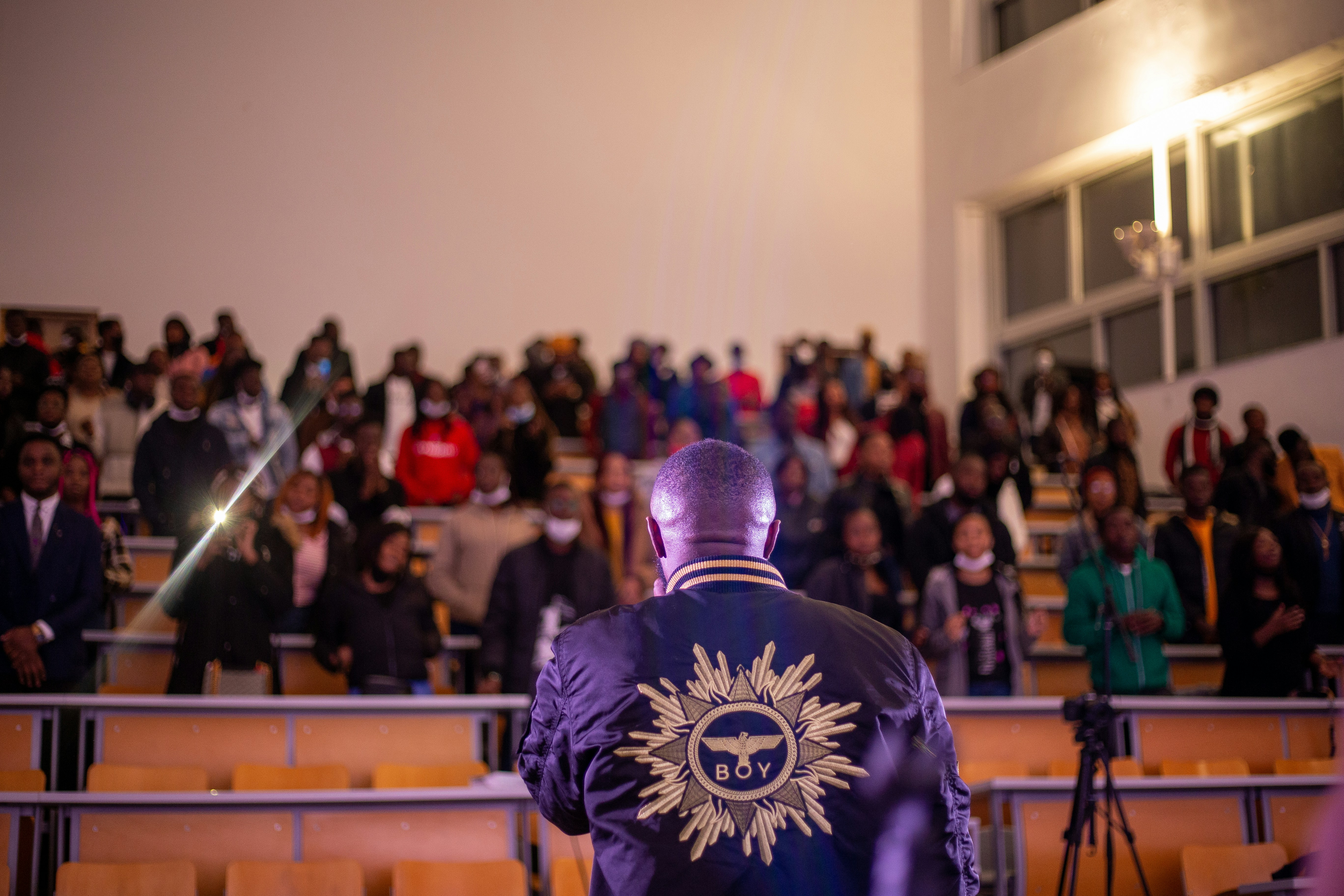
What role is there for African public intellectuals in the current conjuncture?
Bram Fischer was an unlikely candidate for communism. He came from one of the most elite Afrikaner families in South Africa. His grandfather at one time was the prime minister of the Orange River Colony. His father studied at Cambridge while Bram himself studied at Oxford. They all were scions of the legal profession. Bram was a leading and well-respected member of the Johannesburg Bar for thirty years. For a communist, Bram Fischer owed uncanny fidelity to law. He surprisingly had a lot of faith in the judiciary. Hence, when the judges increasingly applied draconian apartheid laws literally, it came as a shock and surprise to him. In his own trial, he chose to make a statement from the dock instead of calling witnesses and taking a witness stand. His main argument was that there comes a time when a person’s moral commitment and the call of the higher cause of freedom and human equality dictate breaking the law. He cited precedents from Afrikaner struggle against the empire when leading members broke the laws of the empire. That brings me to the second interesting contradiction in Bram’s life.
Bram Fischer came from the tradition of Afrikaner nationalism, of which he was very proud. In the context of South Africa, where Afrikaners were a minority, their nationalism was what we would today call ethnic nationalism. When eventually Bram, as a communist, took up the cause of struggle against the apartheid state to build an interracial society, his justification was derived from his belief that an interracial society was the future that the white Afrikaners should accept. There is no indication in his biography that he ever saw a contradiction between his loyalty to Afrikaner nationalism and the wider territorial nationalism that he eventually, albeit indirectly, embraced. That he came to South African nationalism through communism itself testifies that he was driven more by building an interracial society than any grand theory of social emancipation or national liberation. His nationalist consciousness, perhaps, was already occupied by Afrikaner nationalism and had no space for any other nationalism.
Bram Fischer, a leading lawyer-intellectual, was more than a public intellectual. He was a committed communist, a fighter for freedom and a believer in interracial harmony. As a leading member of the bar, he spoke truth to power through the lenses of law. He had taken up over five political cases including the most important treason trial and later the Rivonia trial which sent Nelson Mandela, Walter Sisulu and Govan Mbeki to Robben Island. Bram Fischer’s unreserved commitment, his unquestionable personal integrity, his uncompromising moral conscience and his daring to speak truth to power through the practice of his profession is what brings me to the major theme of my lecture.
Following Edward Said, we often define one of the characteristics of a public intellectual as someone who speaks truth to power. ‘Speaking truth to power’ is taken as axiomatic. But under the current geopolitical situation its axiomatic character itself has been assaulted. We, therefore, need to interrogate it. There are a number of assumptions that underlie it. First, that the power you are speaking truth to is responsible, never mind the extent or depth of its responsibleness. Second, that the power concerned can be shamed, that it shares certain common societal morality. Third, that it still has the remnant capacity to redeem its honour. And fourth, that naming and shaming it would shake it into action. The other important assumption is that there is something that we can all broadly accept as truth. That while truth is not absolute and that it is historical and contextual, within a given context, there is a broad consensus as to what constitutes truth.
What happens when none of these assumptions hold? When you are confronted with a power that is above shaming, a power that is not only immoral but amoral? A power that does not recognise any societal truth but only its own truth which it believes to be absolute, ahistorical and superior to all other truths. That absolute truth is above all truths, and it is revealed only to the chosen people. Therefore, a social consensus on what constitutes truth is out of the question. What happens when such power spins a whole historical and political narrative, which in the eyes of many, is a pack of lies? How do you confront such power by speaking truth to it? If a public intellectual cannot speak truth to such power, what does he or she do? Withdraw to his own back-slapping group? Or give up the vocation of a public intellectual altogether? Well, this is the first level of the crisis of the commitment of the public intellectual.
The second level of the crisis is the university. The university has been the home of many public intellectuals. Relative freedom of the university atmosphere and its declared aim to pursue truth has been a felicitous environment for public intellectuals to speak truth to power, through research, writing, publishing and teaching. But at present the university itself is in crisis. Recently we have witnessed how armed guards have suppressed student protests on campuses, particularly in regard to genocide on the people of Gaza. We have seen how names of faculty and students are unashamedly supplied to Trumpist power. Any criticism, almost any criticism, is labelled as antisemite. The meaning of what is and what is not antisemitic has become so flexible that almost any adverse comment of the state of Israel is caught within the definition of antisemitism. McCarthyism is back in its worst form.
While that is happening on American and European campuses, African university campuses are facing a different type of crisis with the same result. The neo-liberalisation of university education entails undervaluing of humanities and privileges of professional disciplines while at the same time, semesterisation and modularisation of courses resulting in a pedagogy geared to examination undermines critical and original thinking. Accompanying the vocationalization of university education, governance is bureaucratised while academic freedom is all but suppressed. At the University of Dar es Salaam, my alma mater, unauthorized meetings of students are disallowed. At one time, there was even a proposal to install surveillance cameras on the campus. Public lectures and any other similar public activity on campus have to get permission from the administration. An application for a permit has to be given in advance describing the nature of the activity, background of the participants and such other details. The days when militant students could put up plays and organize lectures in what we then called the revolutionary square are gone. The revolutionary square has now become a parking lot. The lingering minority voices from the past revolutionary tradition of the University of Dar es Salaam are not only ignored but ridiculed. During the whole period of genocide committed by Israel over the last two years, there has not been a single public meeting on it nor a protest statement, let alone a demonstration.
Elsewhere in East Africa, the situation is not that different though in some countries like Kenya the protests have moved from university campuses to the streets. Maybe that is the way to go for public intellectuals! On some other African campuses in the south of the continent which have been penetrated by Zionism, I am told, it is some faculty members themselves who question anti-genocide protest in the name of academic freedom. You wave the flag of academic freedom to kill academic responsibility, not an unknown strategy in the armour of the ideological right.
Thus, the premiere home of public intellectuals has been and is being desecrated. Literally, the rug of public terrain has been pulled out from under them. By definition public intellectuals operate and flourish best in the open, in public. When they cannot function in public, they unavoidably find themselves in a crisis. Whither the commitment of the public intellectual then?
The third level of the crisis of the commitment of the public intellectual is the crisis of human rights discourse. In my 1989 monograph on human rights (The Concept of Human Rights in Africa, CODESRIA 1989), I characterised the human rights discourse as an ideology. I showed its Western origins and its use by imperialist powers as the ideology of domination to garner legitimacy and support in the Third World. I argued that the human rights ideology is constructed around bourgeois individualism where an abstract individual, lifted from history, is endowed with a defined bundle of rights. I further argued that the language of human rights was used against colonialism by the leaders of independence movements to rationalise and justify their own struggle. In other words, they changed the human rights ideology into an ideology of resistance and struggle. In claiming independence, Third World leaders aided by the socialist camp, narrowed the meaning of the right of peoples to self-determination to the right to have a sovereign state. As soon as independence was achieved the post-colonial petty and proto-bourgeoisies abused the sovereignty of the state to suppress their own people denying them the right of self-determination. In their quest to accumulate privileges and defend them, they allied with the same imperialist camp that they had fought against, thus failing to assert meaningfully state sovereignty against new forms of domination like what Nkrumah famously called neo-colonialism. The latest form of imperialist control and domination is what we call neo-liberalism.
Writing in 1989, I was still optimistic. My argument was that the working people should zero in on two important rights, the right of people to self-determination and the right to organise. I interpreted the right of people to self-determination expansively to include two elements. Externally, the right is to assert sovereignty of the people and their state against imperialism. Internally, I proposed, the right to self-determination means democratic governance at national and local levels. The full argument is made in the book and I shall not rehearse it here.
In 2023, my publishers, CODESRIA, brought out the second edition of The Concept of Human Rights in Africa. In my introduction to the second edition coming over thirty years later, I am not as sanguine. I am more than sceptical. A lot of water has flowed under the bridge, both the objective and the subjective bridge. After the experience of Somalia, Afghanistan, the final stroke being Libya, I no longer felt at ease to talk about human rights. What happened in Libya was not simply double standards to which we are accustomed in the Western human rights discourse. It was an outright murder of human rights, cynically executed. The right to protect doctrine (R2P) was applied to assault the sovereignty of Libya and murder its leader, Mummar Gaddafi. As some people observed, R2P was born and buried in Libya. After Libya, I could not possibly talk about human rights. When I wrote the introduction, Gaza had not yet happened. Now with Gaza, I feel almost ashamed to say that I am a human rights lawyer. Rights for me have become an albatross. I ended the introduction with a call for going beyond human rights.
I am not sure if other public intellectuals, particularly lawyers, feel the same way about human rights. But whatever they feel, I can be certain that one of the tropes of public intellectuals has collapsed. Another crisis for the public intellectual. In the light of the multiple crisis of the commitment of the public intellectual, what can he or she do? What is to be done? Did Bram Fischer face the same type of crisis during his time and in his legal and political practice, which was his vocation as a public intellectual? No, he did not face a similar crisis, but he did face a couple of dilemmas which neither he nor his biographer makes explicit. Yet, I think, a reader who happens to be a public intellectual would be justified in learning from how Bram Fischer addressed such dilemmas.
In my introductory remarks, I pointed out two contradictions in Bram’s thought. One had to do with his fidelity to law and the other was about the apparent contradiction between parochial Afrikaner nationalism and a more inclusive territorial nationalism entailing national liberation. He seemingly resolved both these dilemmas by embracing communism, more accurately by becoming a member of the Communist Party. He could fight for an interracial society that he envisioned for South Africa only in a space and an organisation which was interracial. Such an organisation was the Communist Party. He could rise above the existing law only by embracing a higher moral and political cause, the cause of freedom and equality. This, as he saw it then, was to be found in the Communist Party. To be sure, there was another driving force which pushed him to embrace communism. During his tour of Europe in the 1940s, he witnessed the rise of Hitler’s fascism. And in the war against fascism, he also witnessed how the Soviet Union almost single-handedly defeated the Nazi army at the cost of twenty million lives. If he saw fascism creeping in South Africa with the coming into power of the National Party government, then there was no better model to follow than the Soviet Union and its communism. I say “if” because it is not clear from his biography that he definitely characterised the National Party Afrikaner government as tending towards fascism or whether he likened apartheid to fascism. He seemed to have a soft heart for the Afrikaner government. It was mutual. As late as 1946, the United Party (National Party) government was toying with the idea of making Bram a judge but after a mine worker’s strike and the subsequent trial of eight members of the party from Johannesburg, in which Bram played a role in their defence, the idea was dropped.
So, we may surmise that Bram Fischer resolved his dilemmas, at least for himself, by becoming a member of the Communist Party which in later years he even led. In the early 1940s, Bram had invited Verwoerd, the future architect of apartheid, to a lunch to convince him to become a socialist. Verwoerd considered it but declined. When in Europe, Bram came across another architect of apartheid, Hertzog, who had cautioned him against remaining in Oxford and losing his Afrikaner identity. In this context, Bram Fischer’s biographer, Stephen Clingman, observes: ‘But in this epoch of ideological flux and contest, as the Hertzogs and Verwoerds withdrew into the fortress of nationalism and ethnicity, they could not understand that Bram was drawn to socialism precisely because it enabled him to remain an Afrikaner while envisioning a new and enlarged world of freedom.’ In my view, this was not simply the biographer’s opinion but also decidedly how Bram himself saw his attraction to socialism. So, while the architects of apartheid withdrew into their racial and ethnic cocoons, Bram rose to the world of greater freedom by embracing socialism. But all remained ardent Afrikaner nationalists. We cannot say how, in his political practice, this reconciliation of his dilemmas would have played out because with nine months underground and almost eight years of incarceration, Bram Fischer did not have the opportunity to practice politics and test his apparent resolution of his dilemmas.
Is there anything that the present public intellectual can learn from Bram Fischer on how to resolve the crisis of his or her commitment in the present genocidal epoch? Her natural ‘habitat’, so to speak, the university is not available. His natural terrain of operation, the public, is fraught with fear and intimidation. What does he or she do? What alternative home can he or she find? What terrain of struggle where he or she can practice her commitment is available? I have no answer. If I were pressed, I would probably say that the public intellectual must transform himself or herself into a Gramscian organic intellectual. That answer is both abstract and unsatisfactory. But, by its very nature, the question demands a concrete answer which can only be given in a concrete struggle and specific historical circumstances.
Bram Fischer answered his apparent dilemmas by embracing the then actually existing communism in his very concrete circumstances. In hindsight, some of his well-wishers, including his biographer, wonder whether he made the right choices. Had he known what happened to the post-1994 interracial society of his South Africa or for that manner what happened to his dear Soviet Union he would have perhaps thought otherwise. I beg to differ. Such hypothetical questions, lifted on context and history, are meaningless. Yet, in my view, they do raise one very permanent issue: Bram Fischer’s Stalinist communism was both limiting and dogmatic. It didn’t open up for him the possibility of envisioning a different future for South Africa other than a harmonious interracial society. His communist armoury was devoid of understanding society and its trajectory in class terms. For the public, or let us say organic intellectuals of today, there is no such excuse. Today we know that the capitalist system which underlay apartheid South Africa, and which was the harbinger of fascism in Europe, and which undergirds imperialism and Zionist genocide is racial capitalism. It is a system which trumps morality, values and humanity in its relentless pursuit of profit and insatiable thirst for accumulation. While there will be many transitions, which will determine concrete trajectory of struggles, ultimately capitalism has to be defeated and transcended. That is the vocation of the Gramscian organic intellectual today.
As a parting shot, I may as well add that in the current milieu, after the experience of the last five or so decades of ‘national liberation’ and nationalism in Africa, the African public intellectual would have to seriously disabuse its ideological apparatus of certain fetishes among which are fetishism of the nation-state, fetishism of democracy and fetishism of so-called peace and reconciliation at the expense of class struggle. In this regard, as long ago as 1948, Georg Luckas warned the German intelligentsia to be wary of similar fetishes. He cautioned them not to mistake imperialist chauvinism for nationalism, to investigate ‘democracy for whom and excluding whom’. He reminded them that Hitler’s fascism was not an aberration but a logical outcome of monopoly capitalism. He was prescient in singling out US imperialism and its tendency towards fascism. In his own words:
This new stage in the development of imperialism will quite probably not be called fascism. And concealed behind the new nomenclature lies a new ideological problem: the “hungry” imperialism of the Germans brought forth a nihilisticcynicism which openly broke with all traditions of humanity. The fascist tendencies arising today in the U.S.A. work with the method of nihilistic hypocrisy. They carry out the suppression and exploitation of the masses in the name of humanity and culture.
Luckas’s words came to pass. Six years later, the US was embroiled in McCarthyism. And today once again US nihilist hypocrisy has returned with an unprecedented vengeance. African public intellectuals must learn from history. Narrow nationalisms, whether state or ethnic, degenerate into xenophobia and genocide, both of which we have witnessed in post-colonial Africa. Under the guise of reconciliation and democracy, coalitions and alliances are made with most reactionary forces in society. We should call this out. Elsewhere in Africa, our compradorial classes are making alliances with rapacious imperialism, auctioning off the continent’s resources and devastating the lives and livelihoods of the working people. We have to relentlessly and unashamedly expose this.
We have no alternative but to rise above parochial state and ethnic nationalisms to universal Pan-Africanism. The African public intellectual must go beyond petty bourgeois ideologies of class collaboration. He must subordinate himself to the leading role of the working people in the struggle for socialism against capitalist-imperialist barbarism. That is the task history has placed before the African public intellectual. May we prove equal to it.
Delivered as the Bram Fischer Memorial Lecture, 2025.
Issa G. Shivji is Professor Emeritus, School of Law at the University of Dar es Salaam.