


NATO’s First Bombing Campaign: The Destruction of Yugoslavia and Lessons for the South
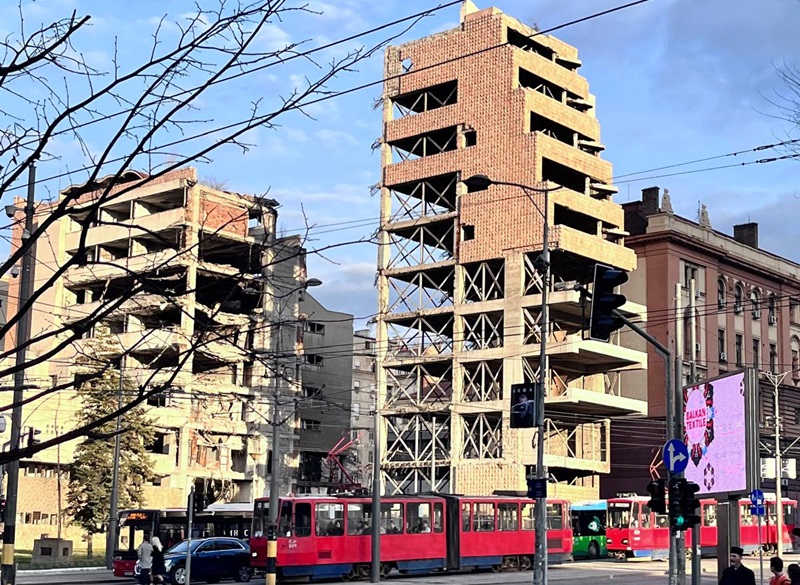
NATO intervention in the Federal Republics of Socialist Yugoslavia was the first of many strategic plans aimed at dismantling countries who refused to fit neatly into the capitalist world-system. Ana Jović highlights the true reasoning behind the intervention and notes that this strategy has since been replicated in places like Libya and Iraq.
The country of the Social Federal Republics of Yugoslavia (SFRY) was the first site of NATO intervention since the dissolution of the Soviet Union. The bombing and the disintegration of the country was the penultimate stage of the long-planned, strategic dismemberment of socialist Yugoslavia and its integration in capitalist world-system. The causes of this crime committed by the North Atlantic Treaty Organization (NATO) pact do not lie in their mercy and desire for justice, as has been falsely presented to the public for decades. It is the opposite.
The beginning of the Yugoslav tragedy goes far further and far deeper than what the imperial journalists in the service of the center of the world-system repeat, in order to justify all the crimes against the peoples of the (semi)periphery and the extraction of wealth from the colonized countries. And there are endless lessons to be learned from NATO’s destruction of Yugoslavia so that the people of the world do not repeat the same mistakes of swallowing imperialist lies and regurgitating talking points that serve the empire and its expansion. Yugoslavia’s case is a recipe that succeeded so well that it has been replicated elsewhere since the 1990s, just look at Libya and Iraq.
The Meaning of Yugoslavia to Global South
The Socialist Federal Republic of Yugoslavia was founded on the principles of anti-fascism and non-alignment—values forged in the crucible of resistance against the fascist scourge that engulfed Europe during World War II. It was the Yugoslav Partisans, not foreign liberators, who expelled the Nazi occupiers, crushed the fascist Croatian Ustaše, and dismantled the networks of local collaborators across the western Balkans. What they reclaimed was not a homogenous nation, but a mosaic of cultures, religions, and identities—unified by a shared commitment to resisting imperialism in all its forms.
Yugoslavia’s model of socialism was independent from the Soviet Union, refusing to be a pawn in either bloc of the Cold War. Its allegiance lay not with empires, but with the oppressed. As liberation movements swept across Africa and Asia, Yugoslavia stood firmly on the side of the colonized. It supported the Algerian FLN in their struggle against French colonialism, the MPLA in Angola’s fight for independence, and stood in unwavering solidarity with the Palestinian cause through the Palestinian Liberation Organization. These weren’t acts of charity—they were acts of solidarity from a nation that understood what it meant to resist occupation and domination.
Unlike much of Europe, whose legacy in the Global South is written in the language of plunder, bombs, and neoliberal diktats, Yugoslavia chose a different path. It didn’t export austerity—it sent doctors, engineers, and technology to nations just beginning to free themselves from colonial rule. This spirit of mutual respect and cooperation earned Yugoslavia the admiration of many post-colonial leaders, who saw in the Yugoslav people not another imperial power, but genuine allies in the struggle for liberation, dignity, and self-reliance. Yugoslavia simply stood as an example of economic development that does not chip away from national sovereignty, while espousing a geopolitical position for the people instead of capital.
The Interstitial Destruction through the Funding of Fascist Elements
Following the death of Josip Broz Tito in 1980, with a funeral attended by most of world leaders especially from Africa, the country was targeted as the global economic conditions were conducive to such malign objectives. The Reagan administration in 1984 authorised National Security Decision Directive 133 which set in motion their goal of the reintegration of Eastern European countries into the world capitalist system. Six years later, in 1990, after Yugoslavia was pushed into an economic crisis (through coercive measures including denying loans coupled with European recession), the US administration decided according to which only independent Yugoslav republics (i.e., Bosnia, Croatia, Macedonia, Montenegro, Serbia, and Slovenia) can receive aid, putting pressure to hold ‘independence’ elections within the Yugoslav republics, instead of at the level of the federal state. Given that some of Yugoslavia’s economy was based on exports, the recession in Europe and the contingence of aid to be based on secession of these republics, the economic conditions worsened and the various fascist elements within the republics began organizing for the dissolution of the country.
With the aid of the International Monetary Fund, the National Endowment for Democracy (NED) and various branches of the Central Intelligence Agency, the US provided financial and planning assistance to Croat and Bosniak separatist political groups and aided Slovenian liberals. These groups have historically had grievances against communist leanings of Yugoslavia and historically sided with Nazis in WWII, yet they were described by the US media as "pro-Western" and "democratic opposition". The foreign influences on the local dynamics of the SFRY following the successful secession of Slovenia in 1991, persuaded Bosniak leader, Alija Izadbegović, to withdraw his signature from the Lisbon Treaty (which later became the Dayton Agreement) signed in 1992 and continue the secessionist war. Croatian Ustaše who sided with the Nazis in WWII were supported by NATO; the Bosniaks funnelled jihadist elements from Saudi Arabia and Afghanistan to claim that this is a war against a communist regime (i.e., SFRY).
This is a recipe repeated in all the former republics and since then has been exported to a number of countries experiencing similar color revolutions. This is where an intensified attack to provoke Yugoslav army through kidnappings, killings, and false flag operations framed against the army, and as the latter retaliates, a propaganda campaign is launched to intensify the anti-Yugoslav sentiment and portray their diabolic intent on forcing the diverse peoples to live together. This has led to some responses from an organized army against these untrained, western-backed secessionist militias. This same pattern took place in southern Serbia, Kosovo, where instead of Bosniaks, Kosovo Albanians assumed the role of “victims” that the West, i.e., NATO needed to "save" after the same forces encouraged them, then armed and trained them so that the last remnant of Yugoslavia would collapse.
It is crucial to affirm that crimes were committed by both sides. However, Serbian crimes were exaggerated and sometimes straight up fabricated, while every crime committed by Bosniaks and then by Albanians was presented as self-defense, if it ever reached the public. Covering up the atrocities committed against the Serbs and twisting the truth served their purpose of giving legitimacy to NATO interventions and concealing their real purpose - military occupation and economic exploitation (as will be detailed below) - which in a wider context opened the door to interventionist politics and crimes that to this day are not allowed to be talked about.
The selectivity of western imperialism in the conflict is quite notable. NATO intervened in 1992-1995 to allegedly defend human rights. This simultaneously enabled Croatia to carry out the largest ethnic cleansing of the 1990s during which 2,500 Serbs were killed and 250,000 Serbs were expelled from their ancient home in Krajina (Croatia), with NATO carrying out its intervention "rehearsal" in 1995 when it bombed Serbian positions in Bosnia in order to enable Bosniaks to achieve their national and US imperial goals against Yugoslav forces. This eventually led to the forceful signing of the Dayton Agreement that gave Bosnia its secession from Yugoslavia.
In the 1990s, Yugoslavia not only faced a military pact with local agents operating in its service, it also came under various forms of pressures, both media and economic. The portrayal of Serbian leadership of Yugoslavia as purely maniacal, bloodthirsty and irrational, justifying any collective punishment imposed on the people of Yugoslavia. This resulted in an economic campaign of sanctions and isolation from the world market that deindustrialised the country and led to skyrocketed inflation and unemployment. This campaign to dissolve Yugoslavia continued throughout the 1990s and became the most intense in 1999 in the month of March — a notorious month for NATO and the collective West as it is the very month where they began their campaigns in Iraq, Libya and Yugoslavia.
Seeing Kosovo in Afghanistan, Libya and Syria
Although, according to the 1974 Yugoslav constitution, Kosovo was given broad autonomy with its own political, financial, legal and cultural institutions with the free use of the Albanian language, this was not enough, simply due because the goal was set differently: the complete ethnic cleansing and takeover of the Serbian province by Albanian secessionists, for the interests of foreign capital. Just as the starvation of the Syrian people by sanctions and the pushing of a relatively stable country into war and chaos and eventually its takeover by extreme groups were the means of the imperial powers, so were the long-term attacks on ethnic Serbs and Montenegrins, who were beaten and intimidated, whose homes and property were burned, and under duress, sold for small sums to pro-secessionist Albanians. All these crimes against the non-Albanian population did not find condemnation, nor did they provoke reactions from the Western public, nor were they identified as such violations of human rights, because everything that serves imperial interests is justified and allowed.
From the very beginning, the strategy of the so-called Kosovo Liberation Army (KLA) was based on provoking the Yugoslav police and security forces so that any reaction to acts of terrorism would be presented as "repression." The goal was to present the responses of the Yugoslav security structures to the violence, murders, kidnappings, mistreatment of the non-Albanian and loyal Albanian population as brutal acts and "humanitarian disasters" that would give the USA and NATO a reason to intervene militarily. This strategy is the consistent course of action of the United States and led to its important goal - to dismember the Yugoslav federation, crush the socialist regime and establish a permanent military base in the geopolitically vital Balkan region.
It's worth noting that the US Department of Foreign Affairs wrote in an internal memo in 1998 that “the KLA abuses or kidnaps anyone who dares to contact the police. They threaten to kill and burn down the houses of anyone who refuses to join the organization. It has gotten to the point that the majority of the population in the Štimlje region is planning to leave their homes due to continuous harassment ”.[i] The former DEA investigator and whistleblower Michael Levin stated that almost every European intelligence service and police has files on "connections between ethnic Albanian rebels and drug trafficking."
Just like years before when the most extreme and dangerous elements of the Mujahideen movement in Afghanistan were funded and trained for the western gains, the same was done with the KLA, which is connected to every drug cartel, Interpol, and almost all European secret services. Even American diplomats, like Christofer Hill, claimed that the KLA was involved in drug trafficking, arms smuggling, but that didn't bother Richard Holbrooke to start taking pictures with the members of the terrorist group, in order to wash away from its history and present it to the Western public as liberation movement.
Similar to the recent cancellation of the $10 million reward for al-Julani by US Middle East Representative Barbara Leaf after the Islamist group announced plans to liberalize the economy and clear the way for the sale of remaining state assets to foreign "investors," Madeleine Albright introduced Hashim Thaci as a Western-recognized negotiator at Rambouillet and began the process of recognizing the KLA as a regular force by Western powers, along with the processes of handing over and selling Serbian assets and resources in Kosovo.
The Rejection of Imperialist Ultimatum and NATO’s 1999 Campaign
“... demolish, destroy, devastate, degrade, and ultimately eliminate the essential infrastructure of [Yugoslavia]” Wesley Clark, NATO Campaign Commander.
After Yugoslavia’s refusal to hand over control of its territory and sovereignty over the country to the NATO occupation forces in the so-called "peace negotiations" in Rambouillet, on March 24th, 1999, the NATO bombing of Yugoslavia and illegal intervention under the guise of "humanitarian intervention" began. During the 78 days of demolishing Serbian cities without the approval of the UN Security Council, NATO forces led by the United States carried out over 38,000 airstrikes, targeting military facilities and civilian infrastructure. Bridges, schools, factories, hospitals, the Serbian Radio and Television building, the Chinese Embassy and around 2,500 dead Serbs were declared "legitimate targets" and "collateral damage."
The attack by the NATO pact, which lost its legitimacy as a defensive military organization with the collapse of the Soviet Union and the Warsaw Pact, was the beginning of devastating interventionist wars and the establishment of a new matrix for the subjugation of recalcitrant states. The goal of the intervention in Yugoslavia was to dismantle the sovereign socialist state that resisted the Western neoliberal hegemony.
The same playbook - lies, media hysteria and demonization of the resisting people and their leaders who are rejecting subjugation and penetration of Western capital, the destruction of the economy, industry and usually the installation of puppet, comprador governments rewarded for turning their country and their people into (semi)peripheral colonies for extracting value - followed in Iraq, Afghanistan, Libya, and finally Syria.
The US-led coalition destroyed Serbian state enterprises, first by bombing: 337 energy plants, factories, commercial and industrial facilities were completely destroyed or damaged, and then by forced privatization of around 2,640 companies in 10 years and the sale or rather handing over of national property to private individuals during the looting of the state and people under the pretext of "restructuring."
Opening the door to foreign private capital and establishing its dominance in key sectors of the Serbian economy—through neoliberal restructuring—represented the second phase in the destruction of Yugoslavia. This came after the bombing and poisoning of the country and its people, following the destruction of chemical and oil facilities and the use of depleted uranium, which only pushed the Serbian people into even deeper misery.
NATO’s Legacy in the Western Balkans and the Law of Empire
On June 9, 1999, NATO's "humanitarian" intervention ended with the signing of the Military Technical Agreement in Kumanovo on June 9 and the withdrawal of Serbian forces from Kosovo, the Kosovo Liberation Army (KLA) engaged in a campaign of intimidation and unrestrained violence against the non-Albanian population under the watchful eye of KFOR (Kosovo Force). About 200,000 Serbs left Kosovo, along with 50,000 Roma. Harassment and violence by Albanian extremists led to impunity of ethnic cleansing carried out under the watchful eye of "humanitarian" forces of the international community and NATO. The economic damage was estimated at a minimum of 30 billion dollars, crippling the Yugoslav economy and leaving hundreds of thousands unemployed.
NATO's intervention was driven exclusively by geopolitical and economic motives. The resistance to economic restructuring and privatization imposed by the IMF had to be broken, and American military bases had to be established in Kosovo. Milošević, who refused to bow to the blackmail of imperial powers, sell the country to Western corporations, or surrender the Serbian province of Kosovo, was portrayed as a 'Balkan butcher.' This narrative served to further demonize him and the entire Serbian people—who were cast as the sole culprits in the wars of the 1990s—thereby facilitating the unhindered military and economic occupation of the country.
The NATO bombing was a turning point in the legitimization of unilateral Western military interventions and set a precedent for later Western interventions under the guise of humanitarianism. The narrative of humanitarian intervention served only to conceal the real geopolitical goals of securing complete control over the Balkans and marginalizing the influence of Serbia's age-old ally Russia.
The forces of the NATO pact, which destroyed 25,000 residential buildings, disabled 470 kilometers of roads and 595 kilometers of railways, 14 airports, 19 hospitals, 20 health centers, 18 kindergartens, 69 schools, 176 cultural monuments and 44 bridges, not only violated the UN Charter, but also committed crimes against the civilian population and civilian infrastructure. according to the Geneva Convention - Article 3, then Articles 51(2), 52(1), 51(4), 51(5)(b), 53, 55 - for which no one was ever held accountable.
In today’s Belgrade, the site of the General Staff building, from which Serbia defended itself and which NATO targeted on the nights of April 29 and 30 in 1999, stands as a hallmark of the brutality of NATO that remains ingrained in the damaged collective memory of the people of Yugoslavia. However, the imperialists (i.e. Jared Kushner with his dappling of Saudi and Emirati sovereign wealth funds) are coming to transform the destruction site into towering skyscrapers to erase the destructive legacy and replace it with capitalist modernity. The people of Serbia protested against this on the 23rd of March, 2025 against NATO, and against imperialism.
Today, while we are watching the planned seizure of the last pieces of land from the Palestinians, the brazen planning to build hotels and settlements for rich tourists and colonizers on the ocean of Palestinian blood, while the recolonization of Syria continues and the terror against non-Sunni minorities and residents loyal to the former president who defended the sovereignty of his people, the ethnic cleansing and colonization of Kosovo are almost complete, all under the guise of "democracy" and "human rights."
The bombing of Serbia was the result of a mutually beneficial agreement between the US and the so-called KLA. Today, the demolition of the resistance axis and the government of Bashar al-Assad, much like the role played by Albanians and Bosniaks before them, serve as pawns in the geopolitical game of the great powers. These powers present themselves as unbiased protectors of Muslims, while the ongoing plundering of the Middle East continues unabated. Meanwhile, weapons and money continue to flow, fueling the killing of Syrian and Palestinian children.
The United States overthrew the Serbian regime in a planned and deliberate manner after a long struggle, followed by Libya, Iraq and Syria - rebel states that sought to preserve sovereignty, territorial integrity and pride in the disposal of their own wealth - thorns in the eyes of the capitalist world-system. To achieve victory in the Middle East, it relied on the help of its allies: Israel, Turkey and the monarchies of the Persian Gulf, just as in the Balkans it relied on the cooperation of Croatian, Bosniak and Albanian extremists to dismember, subjugate, colonize and integrate into the world-system as cheap sources of labor and resources. In the process, they supplied money, weapons and equipment, and provided training to terrorist outlaws, extremists and criminals to later turn them into "legitimate" armies and authorities. The goal is the same: turning countries into outposts of Western capitalist powers where any crime is allowed as long as it does not interfere with economic robbery by multinational corporations. Individuals and peoples who get in the way of the empire must be destroyed, but always under beautiful slogans.
The war imposed on Yugoslavia was only a means to achieve the goals of Western capital and part of a pattern of imperial violence in the process of subjugation to establish control over the colonies, where military force was used to secure economic gains at the expense of the local population.
Yugoslavia, its history and present, should be studied by everyone because it offers us lessons of tricksters, media propaganda, coercive diplomacy and economic measures, and how minorities and minoritized people can become the best instruments for the proliferation of imperialism. Yugoslavia offers these lessons for us to wield off against imperialist terrorism in the future. These lessons ought to be learned, otherwise we will repeat the mistakes of being mere bystanders of history while the imperialist death trains continue to hoard lives, dispossess peoples, and accumulate on a global scale.
Ana Jović is a communist from Bosnia.