


Contrary to the controversy it has engendered, the Nile river agreement should allow for more equitable water use and minimize potential conflicts between the riparian states, says an analyst. 'The problem with the River Nile is lack of cooperation in water management,' Debay Tadesse, senior researcher at the Institute for Security Studies (ISS) in Addis Ababa, said. 'There is enough [water] for all the riparian states and this agreement opens the way for more equitable management.' The 14 May Nile River Basin Cooperative Framework was signed by Ethiopia, Rwanda, Tanzania and Uganda, but was left open for a year. It followed a meeting of water ministers in Sharm El-Sheikh, Egypt, where Burundi, Democratic Republic of Congo, Ethiopia, Kenya, Rwanda, Tanzania and Uganda agreed to it.
The Egyptian government is hoping to cultivate wheat and other cereals on fertile land in African countries to feed its growing population of over 80 million. In early September it signed a deal with the Sudanese government to give Egyptian companies access to Sudanese farmland. 'Growing essential crops like wheat in other water-rich African countries where fertile land is in abundance is an important solution,' said Ayman Farid Abu Hadid, chairman of the state-run Agricultural Research Centre, which signed the deal on behalf of the Egyptian government.
The European Union has signed a voluntary partnership agreement with Cameroon, the largest African exporter of timber products to the EU. By July 2012, all shipments of wood products from Cameroon to the EU will be required to carry a license showing that they contain timber and wood products from a legal origin. This agreement expresses a strong joint commitment to eradicate illegal logging.

Silvia Ribeiro summarises the outcomes of the World People's Conference on Climate Change and the Rights of Mother Earth, held in Bolivia this past April. The Accord of the Peoples, the product of the meeting, highlights the destructive nature of industrial agriculture, agrofuels and new technologies such as transgenics, ‘terminator technologies’ and nanotechnology.
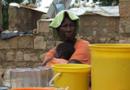
Violence in Cape Town’s Hout Bay over housing has raised a broader debate about housing policy and how a segregated city can transform itself. Ardiel Soeker and Kailash Bhana argue for an alternative way of managing urban housing needs – one that will ensure access for low-income families.
Links on biofuels, land rights in Africa and global land grabbing
Rwanda, home to Africa's largest solar power plant, is eager to harness renewable energy to ensure economic development. But its grand ambitions face many challenges. The US$1.3 million plant, known as Jali, is covered in 4,000 solar panels covering 2,880 square metres. It produces 325,000 kilowatt hours of electricity a year - but this is still just 0.1 per cent of Rwanda's total electricity production.
Long regarded as the poorer cousin of its Zimbabwean neighbour, Zambia is fast gaining attention as a desirable destination for agricultural investors. International investors from Britain to South Africa have begun putting money into infrastructure development and transport, and about 200 exiled Zimbabwean farmers have taken leases from the Zambian government to develop farmland in the country.
'We call on government to listen to the demands of the poor in Hout Bay. We call on government to immediately end all evictions of poor people in Hout Bay. We call on government to upgrade all homes of poor people in Hout Bay to proper housing. We call on government to end police violence towards poor people in Hout Bay.'
A new film and book, launched in London on 5 October, show how community participation in development projects has led to successful agricultural change and environmental recovery in Burkina Faso and Kenya. They show that despite a growing population, tree cover and food production have
both improved because of the tactics local people have adopted to manage their environment.
Five million barrels of oil reportedly spilled into the waters of the Gulf of Mexico. For both environmentalists and people whose livelihood depends on the fishing and tourism potential of the Gulf, this was a grim disaster. But if Americans with all the sophisticated necessary gadgets could not contain the oil spill, what is the fate of developing economies of Africa, especially the Gulf of Guinea where oil discoveries are mostly offshore? Indeed, recent discoveries in Sierra Leone, Ghana and Angola are all offshore, writes Edem Torkornoo for TWN Africa.
This paper describes the potential role innovative agricultural practices and technologies can play in climate change mitigation and adaptation and aims to address the question: what policy and institutional changes are needed to encourage the innovation and diffusion of these practices and technologies to developing countries? The authors focus on developing countries in general with some specific references to Africa.
In the semi-arid Laikipia district of Kenya’s Rift Valley province, research scientist Sarah Ogalleh Ayeri travels from one village to another, documenting methods used by peasant farmers as they attempt to adapt to changing climatic conditions. She is a research scientist at the Centre for Training and Integrated Research for Arid and Semi-Arid Lands Development and her study is titled 'Lessons from Farmers: localised adaptations in agriculture as building blocks to climate change adaptation in Laikipia district'.
A new issue of the South Bulletin focuses on the growing shortage of water which has emerged as one of the major crises of our times. A third of the world's people face water scarcity and by 2025 two-thirds of people may suffer water stress. This crisis should be at the top of the global agenda, says the South Centre.

Writing as Nigeria marks 50 years of independence, Sokari Ekine stresses that as vivid as the photos within Ed Kashi’s work ‘Curse of the Black Gold’ are, the reality for Niger Deltans is even worse.
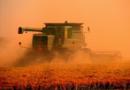
New food security policies in Mozambique wrongly focus on increasing food production through large-scale farming, instead of supporting small-scale agriculture, writes Rebecca Burns. Food insecurity in Mozambique will actually increase as processed foods become more expensive and ordinary people can no longer afford to eat.
The acid mine drainage problem was being closely monitored and was not an 'imminent horror show', the Department of Mineral Resources' chief director of mining and mineral policy, Ntokozo Ngcwabe, told MPs yesterday. Concern over the threatened decanting of acid mine drainage into the water table in the Witwatersrand basin has caused mounting concern. Options for dealing with the problem included the construction of canals, controlled points for decanting, and water treatment using various technologies. The department would soon decide on the preferred solutions, which would be implemented in phases over the next 10 years, with the initial focus on the high - risk areas.
Although 70 per cent of Madagascar’s 20 million people are peasants, the country depends on imports for 20 per cent of its staple food, rice. Also, 30 percent of Madagascar’s land can be used for agriculture, but only 4 percent of the land is actually farmed. The government has neither the budget nor any effective strategies to address these problems. “All we do is hope for investments and technology transfers from overseas,” says Rakotoson Philibert, secretary-general of the Ministry of Agriculture.
BHP Billiton was guilty of double standards by complicating public access to documents about a planned filter shutdown at its Mozambican aluminium smelter, an activist said on Friday. “I don't understand how a corporate like BHP can do one thing in South Africa and across the border it does something completely different,” said environmental activist Sandy Camminga.
For many millions in the developing world, land is central to livelihoods, food security, even identity. It is not surprising, then, that a recent wave of large - scale land acquisitions in poorer countries has sparked a major debate. This brief from the International Institute for Environment and Development lays out key trends, drivers and main features of the deal, with a focus on Africa.